.jpg)

Life after T+1
26 Nov 2025
Lloyd Sebastian, vice president of global financial institutions at CIBC Mellon, discusses Canada’s post T+1 evolution, the shift toward data-driven servicing, and how the firm is leveraging AI and digital innovation to meet client demand
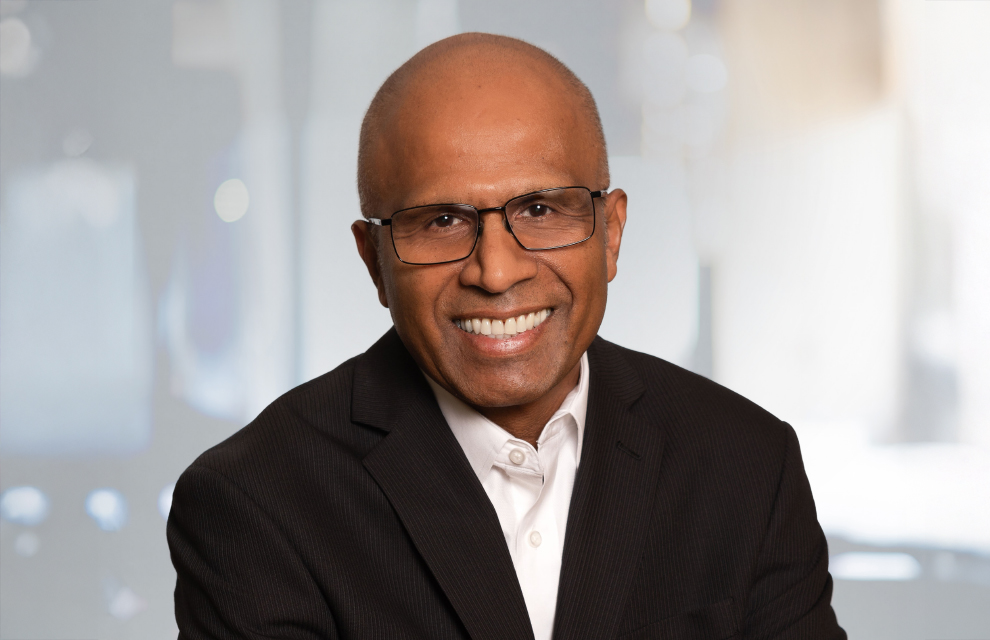 Image: CIBC Mellon
Lloyd Sebastian has spent more than three decades inside Canada’s custody and asset servicing engine room, from operations, client management to risk, and today, as vice-president and segment head for global financial institutions at CIBC Mellon.
That longevity gives him a clear read on where value is migrating. “The market has moved way beyond the commoditised component,” he says. “Clients want information faster, quicker, and accurate — and, more than anything else, they want clean data.”
Sebastian’s patch is Canadian sub-custody for cross-border clients investing into Canada — a vantage point that combines local nuance with global expectations.
The commodity layer, he stresses, still matters: “It’s the foundation of the building.” But the contest is now being won in the layers above: data delivery, analytics, and intelligent workflow.
Readiness over rhetoric
North America’s move to T+1 is already embedded in. “T+1 is done — settled — and part of our DNA since May last year,” Sebastian states. Canada prepared in lockstep with the US, with close coordination across markets and infrastructures.
A true-match market structure and longstanding matching guidelines helped compress timelines without drama. Early concerns around securities lending liquidity and post-trade fails “didn’t play out,” he adds. “We’re in a faster, swifter, less risky environment.
“If there’s a lesson for Europe, it’s cultural and operational — not just technical.
“Getting the market players ready, not the big ones, but everyone, is critical,” he notes, recalling Canada’s pre-go-live work with batch-based smaller firms and even fax-reliant investment managers.
Scale can be managed if regulatory expectations align in the European and global landscape, he argues, but “bringing different business cultures together in collaboration to implement this initiative is the big one.”
Data, then AI — in that order
Ask Sebastian what Canadian institutions want next and he comes back to data. Demand is rising for timely, accurate, aggregated information and the tools to act on it.
“Behind the need for digital assets also drives the need for data,” he reflects. “Clean data, quicker — with better insights.”
AI sits on top of that foundation, applied in two directions: inward for efficiency, outward for client impact. Internally, CIBC Mellon continues to advance its operating model through technology enablement and a culture of engagement and support, staying focused on delivering stronger results for clients.
The joint-venture ownership model helps: “We’re owned by two investing heavily in AI. We leverage our parents and build what works uniquely for our clients,” he says.
Digital assets: From appetite to regulated delivery
Canada has been more conservative than some peers, but Sebastian sees the tide turning as regulated institutions step in.
“We’re aligning our digital strategy with clients and working to make regulators comfortable that a regulated, asset servicing approach is the way forward,” he says.
The joint venture structure again provides a springboard: initiatives proven in other geographies can be adapted rather than built from scratch.
Beyond crypto, he flags a cross-border twist: growing appetite for exposure to Canadian securities via American depositary receipts (ADRs).
While Canada’s interlisting links to the US are deep, ADRs can widen access where interlisting is absent. “We’re seeing players emerge with interesting propositions here,” he notes.
Growth bets: Middle office and client advocacy
On growth, Sebastian is emphatic: digital assets and middle office outsourcing top the list.
Asset managers that long ago outsourced the back office are rerunning the calculus in the middle.
“Is there synergy in someone doing it cheaper at scale and bringing efficiencies? We’ve had successes with significantly large managers,” he adds, calling it a core pipeline for the years ahead.
Asked what keeps him energised personally, Sebastian points to the ambassadorial side of sub-custody. Most of his clients are global custodians who rely on CIBC Mellon as their agent bank in Canada.
“I want to be their voice, to represent them and their clients,” he says. That means translating global best practices into Canadian flows and processes, sharing local market intelligence, and shaping practical solutions.
“In an agent bank relationship partnering and servicing the global financial intermediary peer group client base as a local market sub- custodian requires a unique value proposition to support the service model and alignment to best practices across their global subcustodian network. This makes the sub-custody service offering more interesting and rewarding
If Canada’s shift to T+1 was the visible headline, Sebastian suggests the real story now is subterranean: cleaner datasets, smarter tooling and different operating models.
In a market where the plumbing is humming, differentiation is less about who settles at the commoditised level and more about who illuminates — and how quickly they can put that insight in the client’s hands.
That longevity gives him a clear read on where value is migrating. “The market has moved way beyond the commoditised component,” he says. “Clients want information faster, quicker, and accurate — and, more than anything else, they want clean data.”
Sebastian’s patch is Canadian sub-custody for cross-border clients investing into Canada — a vantage point that combines local nuance with global expectations.
The commodity layer, he stresses, still matters: “It’s the foundation of the building.” But the contest is now being won in the layers above: data delivery, analytics, and intelligent workflow.
Readiness over rhetoric
North America’s move to T+1 is already embedded in. “T+1 is done — settled — and part of our DNA since May last year,” Sebastian states. Canada prepared in lockstep with the US, with close coordination across markets and infrastructures.
A true-match market structure and longstanding matching guidelines helped compress timelines without drama. Early concerns around securities lending liquidity and post-trade fails “didn’t play out,” he adds. “We’re in a faster, swifter, less risky environment.
“If there’s a lesson for Europe, it’s cultural and operational — not just technical.
“Getting the market players ready, not the big ones, but everyone, is critical,” he notes, recalling Canada’s pre-go-live work with batch-based smaller firms and even fax-reliant investment managers.
Scale can be managed if regulatory expectations align in the European and global landscape, he argues, but “bringing different business cultures together in collaboration to implement this initiative is the big one.”
Data, then AI — in that order
Ask Sebastian what Canadian institutions want next and he comes back to data. Demand is rising for timely, accurate, aggregated information and the tools to act on it.
“Behind the need for digital assets also drives the need for data,” he reflects. “Clean data, quicker — with better insights.”
AI sits on top of that foundation, applied in two directions: inward for efficiency, outward for client impact. Internally, CIBC Mellon continues to advance its operating model through technology enablement and a culture of engagement and support, staying focused on delivering stronger results for clients.
The joint-venture ownership model helps: “We’re owned by two investing heavily in AI. We leverage our parents and build what works uniquely for our clients,” he says.
Digital assets: From appetite to regulated delivery
Canada has been more conservative than some peers, but Sebastian sees the tide turning as regulated institutions step in.
“We’re aligning our digital strategy with clients and working to make regulators comfortable that a regulated, asset servicing approach is the way forward,” he says.
The joint venture structure again provides a springboard: initiatives proven in other geographies can be adapted rather than built from scratch.
Beyond crypto, he flags a cross-border twist: growing appetite for exposure to Canadian securities via American depositary receipts (ADRs).
While Canada’s interlisting links to the US are deep, ADRs can widen access where interlisting is absent. “We’re seeing players emerge with interesting propositions here,” he notes.
Growth bets: Middle office and client advocacy
On growth, Sebastian is emphatic: digital assets and middle office outsourcing top the list.
Asset managers that long ago outsourced the back office are rerunning the calculus in the middle.
“Is there synergy in someone doing it cheaper at scale and bringing efficiencies? We’ve had successes with significantly large managers,” he adds, calling it a core pipeline for the years ahead.
Asked what keeps him energised personally, Sebastian points to the ambassadorial side of sub-custody. Most of his clients are global custodians who rely on CIBC Mellon as their agent bank in Canada.
“I want to be their voice, to represent them and their clients,” he says. That means translating global best practices into Canadian flows and processes, sharing local market intelligence, and shaping practical solutions.
“In an agent bank relationship partnering and servicing the global financial intermediary peer group client base as a local market sub- custodian requires a unique value proposition to support the service model and alignment to best practices across their global subcustodian network. This makes the sub-custody service offering more interesting and rewarding
If Canada’s shift to T+1 was the visible headline, Sebastian suggests the real story now is subterranean: cleaner datasets, smarter tooling and different operating models.
In a market where the plumbing is humming, differentiation is less about who settles at the commoditised level and more about who illuminates — and how quickly they can put that insight in the client’s hands.
NO FEE, NO RISK
100% ON RETURNS If you invest in only one asset servicing news source this year, make sure it is your free subscription to Asset Servicing Times
100% ON RETURNS If you invest in only one asset servicing news source this year, make sure it is your free subscription to Asset Servicing Times