.jpg)

Cross-border flows, market infrastructure, and the next phase of custody
15 Apr 2026
Viraj Kulkarni, CEO of PIVOT, speaks to Zarah Choudhary about how cross-border investment flows are evolving, why India has become a key market for global custodians, and how Asia, Europe, and the Middle East are developing along very different infrastructure paths
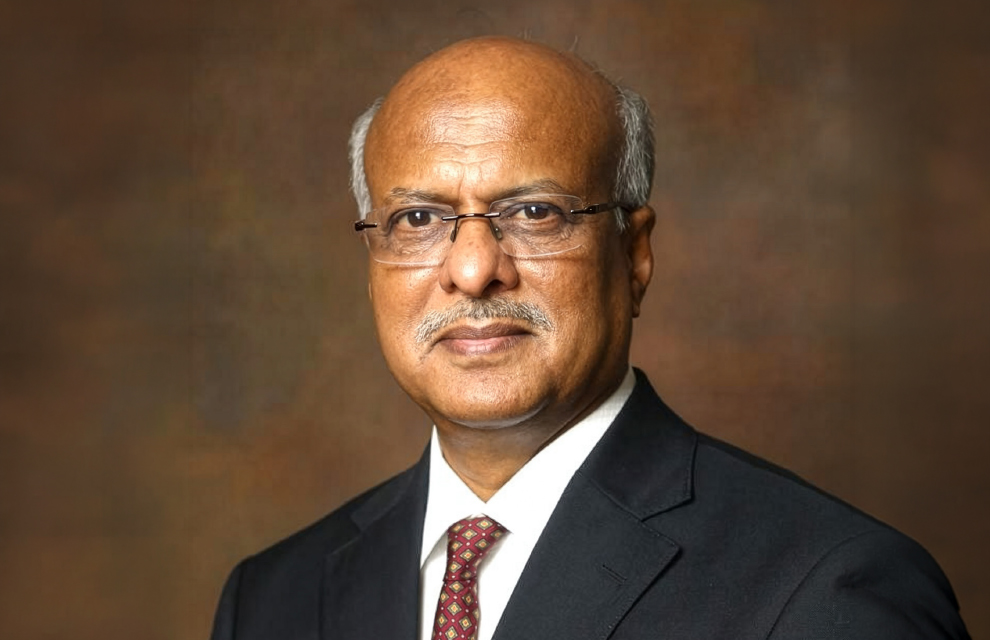 Image: PIVOT
As cross-border investment flows continue to reshape global capital markets, custodians and intermediaries are being pushed to adapt to shifting settlement cycles, technological advancements, investment in cybersecurity and governance standards, new asset formats, everchanging multiple country regulations, rising investor expectations, training and development, and increasingly fragmented regional development.
For Viraj Kulkarni, CEO of PIVOT, the changes are especially visible in India — a market he describes as having moved from being seen as difficult to access in early ‘90s to being defined by the speed of its reform. India was the first country to implement T+1 rolling settlement. India is a nation in hurry.
Kulkarni says India’s cross-border segment has become too large for global custodians to ignore. Over the years, global custodians have learnt to cope up with the dynamic nature of India market. The global custodians and foreign investors appreciates its forward-looking framework, access to Securities and Exchange Board of India (SEBI).
In the last two years, SEBI extensively engaged with custodians on material changes in regulations or practices through multiple standing committees, thereby engaging and seeking feedback from all stakeholders.
According to Kulkarni, foreign portfolio investment into Indian equities now stands at just over US$1 trillion, while foreign direct investment adds a further substantial layer of over US$1 trillion. Together with domestic assets, he says the total Indian custody market is now about US$3.4 trillion and could rise to US$5 trillion in the coming years.
In the foreign portfolio investor segment alone, Kulkarni says around 80 per cent of business comes through global custodians rather than direct local custody relationships.
“The global custodians play a significant role in the inflow business,” he explains. “The market has grown in two ways. One is the number of investors investing into India, and the second is the speed at which the Indian capital market itself has changed.”
India, he highlights, was once regarded as a cumbersome market where entry norms were challenging and operational processes were less Straight-Through Processing (STP). That is no longer the case. Instead, the challenge for international firms is keeping pace with the change. Some of the critical changes are same day repatriation, netting of buy vs sale on same day, digital signature, direct payout, electronic digital instruction slip, e-voting, market vide interoperability, integration of real-time application programming interfaces (API), dedicated Foreign Portfolio Investment (FPI) portal and the digital banking has created value adds for the investors.
“India used to operate with much longer settlement cycles,” Kulkarni says. “Then it became the first country in the world to move to T+1. Nobody expected that this change would happen in India, but every global custodian had to change its processes because the settlement cycle changed, new products were introduced and investors from many more countries invested in Indian capital markets. Risk containment and increase liquidity became the new mantra. Today investors from over 62 countries participate.”
That shift forced custodians to rethink instruction management, settlement operations, technology infrastructure, and client management in a market that, Kulkarni notes, is not fully convertible and thus settles through the Indian rupee. Initial fears around increased breaks, compliance problems, and settlement risk, he says, did not materialise at the scale some expected.
“What they feared — that this could create breaks, compliance issues, risk issues or losses — has turned out to be unwarranted fear,” he observes. “The volume shot up, they adapted, they changed.”
Kulkarni credits much of that progress to the SEB), which he describes as a pragmatic and highly engaged regulator. In his view, India’s success has depended not only on regulatory control, but on a regulator that understands where the market wants to go and is willing to build rules around that direction. It engages market participants and thus the developments are more resolute.
“A well-regulated market is one where the regulator understands the pulse of the country, the pulse of the market, and where the country wants to go,” he highlights. “SEBI has turned the market into what it is today.”
He also points to innovations such as direct payouts to custodians, digital platforms, and other technology-led improvements as measures that helped global custodians settle transactions more efficiently and support a rising volume of cross-border activity. India’s appeal, Kulkarni states, is not just regulatory.
It is also structural. The country’s market is large enough to stand on its own, with listed securities that are largely domestic rather than dual-listed elsewhere. At the same time, India’s post-trade efficiency has supported liquidity and made the market more attractive to international investors.
“If you look at the last 30 years, the two indices which have overperformed are the US and India,” he says. “Investor interest into the Indian market significantly rose, and liquidity on a T+1 cycle enables investors to turn around positions and have more cash to invest.”
He adds that India’s investor base has expanded rapidly, growing from around 55 million investors pre-Covid to roughly 220 million today, across a mix of retail and institutional participation. For custodians, that growth has been matched by diversification in the origin of foreign investment, with countries such as Norway moving higher up the list of major investing jurisdictions.
While India remains a central reference point in Kulkarni’s analysis, he sees regional market infrastructure development following three distinct tracks across Asia, Europe, and the Middle East.
Asia, he points out, is defined by speed, growth, and technology. Markets such as India, Indonesia, China, and Hong Kong are benefiting from expanding investor participation, stronger returns relative to some developed markets, and fast-moving infrastructure modernisation.
“I would attribute growth to be the key word when it comes to Asia,” he comments.
“These markets are powered by technological advancement. We have exchanges with a lot of data, many of them cloud-native, and a lot of APIs being used in this part of the world.”
Europe, by contrast, is characterised less by speed and more by harmonisation. Kulkarni describes the region as a market that is preparing carefully for its next phase, particularly as it works towards T+1 settlement.
“Europe to me is more about doing it right, doing it well and doing it together,” he remarks. “There are many countries, each with its own uniqueness, and once they put something in action, it stays for a long time.”
In his view, Europe could become a “dark horse” over the next few years if it can successfully align its fragmented legal and operational frameworks. He suggests that once T+1 is fully implemented, volumes could rise materially as efficiency improves across the bloc. The Middle East, meanwhile, is evolving through a different set of forces. Kulkarni describes the region as both a developing capital market story in its own right and an important bridge for frontier markets, particularly in Africa.
Diversification away from oil and into areas such as renewable energy is attracting investment, which in turn is drawing in larger global custody players.
“Middle East is turning out to be a very interesting case,” he says. “These economies themselves are growing, the investor interest is growing, and the countries are making efforts to diversify.”
At the same time, he acknowledges that current geopolitical instability is already having a wider impact.
“The impact in the Middle East is definitely going to affect the entire world,” he says. “It is not just capital markets — every phase of life is getting impacted.”
In the short term, Kulkarni expects disruption to drive inflation and increase the need for capital to restore infrastructure and confidence. Over the longer term, he believes rebuilding efforts will generate new forms of economic activity, although likely with a focus on physical infrastructure before capital market development resumes at pace.
Across both emerging and mature markets, Kulkarni sees regulators facing a more complex balancing act than in previous decades. In emerging markets, he points out, the regulator remains the primary driver of market structure and reform.
In mature markets, the challenge is increasingly one of legacy systems, slower demographic growth, fragmented rules, and the rising cost of adaptation.
“One size fits all regulation does not work anymore,” he says.
That is partly because the product mix itself has changed. Traditional equities and fixed income instruments now sit alongside indices, digital assets and a wider variety of investor profiles. Regulators are being asked to protect first-time retail investors, manage cross-border risk, respond to faster settlement cycles, and build frameworks for entirely new asset classes — all while keeping markets secure.
For Kulkarni, cyber security now sits at the top of that list.
“The first thing that a regulator faces in any market — advanced, frontier or emerging — has got to do with cyber security,” he says. “This is the biggest problem for any market because everybody gets impacted: the exchanges, the depositories, the clearing houses, the banks.”
Digital assets have added a further layer of regulatory difficulty. Whereas regulators once dealt largely with traditional instruments, they are now being forced to build parallel rulebooks for products that behave differently and cannot be supervised through the same frameworks.
“The task of the regulator was to see that everybody was protected without necessarily understanding how to protect them in the beginning,” Kulkarni says.
Ultimately, he argues, different regions are succeeding in different ways. Emerging markets tend to be regulator-led, Europe remains process-led, and the US is more product and market-led. No single model is universally better, he says; each reflects the structure and priorities of its underlying economy.
“Every market has its own challenges,” he says. “Everyone tries to position that they are good for something. Everyone is relevant depending on which segment is investing.”
As market infrastructure continues to evolve through digitisation, automation, and new regulatory frameworks, Kulkarni believes many institutions are still underprepared for the scale of change underway.
Cybersecurity, he says, remains one of the most pressing gaps. Rapid digitisation across financial services — including API-driven trading, cloud infrastructure, and real-time payment flows — has accelerated faster than the industry’s cyber resilience capabilities.
“Digitisation has scaled very rapidly, but cyber maturity has not always kept pace,” Kulkarni says. “Institutions remain vulnerable to sophisticated and coordinated attacks.”
Another area of concern is the increasing use of AI and algorithmic models in trading, compliance monitoring, and operational workflows. While adoption is growing quickly, governance frameworks around these technologies are still developing.
“The use of algorithms and AI in trading, surveillance, and operations is rising,” he explains. “But model governance, explainability, and proper audit trails are still evolving.”
Kulkarni also points to persistent issues around data governance. Fragmented systems and inconsistent data standards across institutions continue to limit the effectiveness of risk monitoring and regulatory reporting, particularly as regulators demand more granular and real-time information.
“Data quality and governance remain major challenges,” he says. “Without consistent data standards, it becomes harder to monitor risk effectively or meet regulatory reporting expectations.”
Regulatory agility is another structural pressure point. In markets such as India, where regulators such as the SEBI and the Reserve Bank of India (RBI) frequently introduce new reforms, institutions must adapt quickly at both the technological and operational level.
“Frequent regulatory changes require rapid adaptation,” Kulkarni notes. “Many players still struggle with the combination of technology and process agility required to implement these changes quickly.”
Looking ahead, Kulkarni believes the next phase of transformation in global investment infrastructure will be shaped not only by technology, but also by the geopolitical environment.
“Increasingly, the focus may shift from wealth creation to wealth protection,” he observes. “Geopolitical disturbances could slow the rollout of entirely new products, but they will also drive innovation in how existing business is conducted.”
One of the most significant structural shifts, he suggests, will be the continued movement towards real-time markets. The transition from T+1 settlement towards near-instant or T+0 settlement could reshape liquidity management, operational risk, and capital allocation across the industry.
At the same time, tokenisation is likely to gain further momentum, particularly in fixed income and alternative assets.
“We are likely to see a gradual shift towards digital or tokenised securities, especially in areas such as bonds and alternative investments,” Kulkarni says.
Data, he adds, will increasingly become core infrastructure rather than a supporting function. Markets are already moving towards real-time data flows, continuous regulatory reporting and supervisory technologies such as RegTech and SupTech.
AI will also play a growing role across trading, compliance, and servicing operations. However, Kulkarni emphasises that stronger governance frameworks will be required to ensure these systems remain transparent and accountable.
Alongside these developments, cybersecurity will become an even greater systemic priority. As financial markets become more digitised and interconnected, market infrastructure will increasingly be treated as critical national infrastructure, requiring stronger cyber resilience frameworks.
Kulkarni also expects traditional industry boundaries to blur further. Banks, brokers, asset managers, and fintech firms are likely to operate within more interconnected ecosystems, creating new collaborative operating models across the investment value chain.
Ultimately, he points that success in the next phase of market infrastructure development will depend on institutions strengthening their internal capabilities.
“The new priorities will be around data governance, AI controls, cyber readiness, and faster regulatory adaptation,” he says.
At the same time, the human dimension of transformation should not be overlooked.
“Training and reskilling will become increasingly important,” Kulkarni highlights. “As the infrastructure evolves, the workforce will also need to evolve with it.”
For Viraj Kulkarni, CEO of PIVOT, the changes are especially visible in India — a market he describes as having moved from being seen as difficult to access in early ‘90s to being defined by the speed of its reform. India was the first country to implement T+1 rolling settlement. India is a nation in hurry.
Kulkarni says India’s cross-border segment has become too large for global custodians to ignore. Over the years, global custodians have learnt to cope up with the dynamic nature of India market. The global custodians and foreign investors appreciates its forward-looking framework, access to Securities and Exchange Board of India (SEBI).
In the last two years, SEBI extensively engaged with custodians on material changes in regulations or practices through multiple standing committees, thereby engaging and seeking feedback from all stakeholders.
According to Kulkarni, foreign portfolio investment into Indian equities now stands at just over US$1 trillion, while foreign direct investment adds a further substantial layer of over US$1 trillion. Together with domestic assets, he says the total Indian custody market is now about US$3.4 trillion and could rise to US$5 trillion in the coming years.
In the foreign portfolio investor segment alone, Kulkarni says around 80 per cent of business comes through global custodians rather than direct local custody relationships.
“The global custodians play a significant role in the inflow business,” he explains. “The market has grown in two ways. One is the number of investors investing into India, and the second is the speed at which the Indian capital market itself has changed.”
India, he highlights, was once regarded as a cumbersome market where entry norms were challenging and operational processes were less Straight-Through Processing (STP). That is no longer the case. Instead, the challenge for international firms is keeping pace with the change. Some of the critical changes are same day repatriation, netting of buy vs sale on same day, digital signature, direct payout, electronic digital instruction slip, e-voting, market vide interoperability, integration of real-time application programming interfaces (API), dedicated Foreign Portfolio Investment (FPI) portal and the digital banking has created value adds for the investors.
“India used to operate with much longer settlement cycles,” Kulkarni says. “Then it became the first country in the world to move to T+1. Nobody expected that this change would happen in India, but every global custodian had to change its processes because the settlement cycle changed, new products were introduced and investors from many more countries invested in Indian capital markets. Risk containment and increase liquidity became the new mantra. Today investors from over 62 countries participate.”
That shift forced custodians to rethink instruction management, settlement operations, technology infrastructure, and client management in a market that, Kulkarni notes, is not fully convertible and thus settles through the Indian rupee. Initial fears around increased breaks, compliance problems, and settlement risk, he says, did not materialise at the scale some expected.
“What they feared — that this could create breaks, compliance issues, risk issues or losses — has turned out to be unwarranted fear,” he observes. “The volume shot up, they adapted, they changed.”
Kulkarni credits much of that progress to the SEB), which he describes as a pragmatic and highly engaged regulator. In his view, India’s success has depended not only on regulatory control, but on a regulator that understands where the market wants to go and is willing to build rules around that direction. It engages market participants and thus the developments are more resolute.
“A well-regulated market is one where the regulator understands the pulse of the country, the pulse of the market, and where the country wants to go,” he highlights. “SEBI has turned the market into what it is today.”
He also points to innovations such as direct payouts to custodians, digital platforms, and other technology-led improvements as measures that helped global custodians settle transactions more efficiently and support a rising volume of cross-border activity. India’s appeal, Kulkarni states, is not just regulatory.
It is also structural. The country’s market is large enough to stand on its own, with listed securities that are largely domestic rather than dual-listed elsewhere. At the same time, India’s post-trade efficiency has supported liquidity and made the market more attractive to international investors.
“If you look at the last 30 years, the two indices which have overperformed are the US and India,” he says. “Investor interest into the Indian market significantly rose, and liquidity on a T+1 cycle enables investors to turn around positions and have more cash to invest.”
He adds that India’s investor base has expanded rapidly, growing from around 55 million investors pre-Covid to roughly 220 million today, across a mix of retail and institutional participation. For custodians, that growth has been matched by diversification in the origin of foreign investment, with countries such as Norway moving higher up the list of major investing jurisdictions.
While India remains a central reference point in Kulkarni’s analysis, he sees regional market infrastructure development following three distinct tracks across Asia, Europe, and the Middle East.
Asia, he points out, is defined by speed, growth, and technology. Markets such as India, Indonesia, China, and Hong Kong are benefiting from expanding investor participation, stronger returns relative to some developed markets, and fast-moving infrastructure modernisation.
“I would attribute growth to be the key word when it comes to Asia,” he comments.
“These markets are powered by technological advancement. We have exchanges with a lot of data, many of them cloud-native, and a lot of APIs being used in this part of the world.”
Europe, by contrast, is characterised less by speed and more by harmonisation. Kulkarni describes the region as a market that is preparing carefully for its next phase, particularly as it works towards T+1 settlement.
“Europe to me is more about doing it right, doing it well and doing it together,” he remarks. “There are many countries, each with its own uniqueness, and once they put something in action, it stays for a long time.”
In his view, Europe could become a “dark horse” over the next few years if it can successfully align its fragmented legal and operational frameworks. He suggests that once T+1 is fully implemented, volumes could rise materially as efficiency improves across the bloc. The Middle East, meanwhile, is evolving through a different set of forces. Kulkarni describes the region as both a developing capital market story in its own right and an important bridge for frontier markets, particularly in Africa.
Diversification away from oil and into areas such as renewable energy is attracting investment, which in turn is drawing in larger global custody players.
“Middle East is turning out to be a very interesting case,” he says. “These economies themselves are growing, the investor interest is growing, and the countries are making efforts to diversify.”
At the same time, he acknowledges that current geopolitical instability is already having a wider impact.
“The impact in the Middle East is definitely going to affect the entire world,” he says. “It is not just capital markets — every phase of life is getting impacted.”
In the short term, Kulkarni expects disruption to drive inflation and increase the need for capital to restore infrastructure and confidence. Over the longer term, he believes rebuilding efforts will generate new forms of economic activity, although likely with a focus on physical infrastructure before capital market development resumes at pace.
Across both emerging and mature markets, Kulkarni sees regulators facing a more complex balancing act than in previous decades. In emerging markets, he points out, the regulator remains the primary driver of market structure and reform.
In mature markets, the challenge is increasingly one of legacy systems, slower demographic growth, fragmented rules, and the rising cost of adaptation.
“One size fits all regulation does not work anymore,” he says.
That is partly because the product mix itself has changed. Traditional equities and fixed income instruments now sit alongside indices, digital assets and a wider variety of investor profiles. Regulators are being asked to protect first-time retail investors, manage cross-border risk, respond to faster settlement cycles, and build frameworks for entirely new asset classes — all while keeping markets secure.
For Kulkarni, cyber security now sits at the top of that list.
“The first thing that a regulator faces in any market — advanced, frontier or emerging — has got to do with cyber security,” he says. “This is the biggest problem for any market because everybody gets impacted: the exchanges, the depositories, the clearing houses, the banks.”
Digital assets have added a further layer of regulatory difficulty. Whereas regulators once dealt largely with traditional instruments, they are now being forced to build parallel rulebooks for products that behave differently and cannot be supervised through the same frameworks.
“The task of the regulator was to see that everybody was protected without necessarily understanding how to protect them in the beginning,” Kulkarni says.
Ultimately, he argues, different regions are succeeding in different ways. Emerging markets tend to be regulator-led, Europe remains process-led, and the US is more product and market-led. No single model is universally better, he says; each reflects the structure and priorities of its underlying economy.
“Every market has its own challenges,” he says. “Everyone tries to position that they are good for something. Everyone is relevant depending on which segment is investing.”
As market infrastructure continues to evolve through digitisation, automation, and new regulatory frameworks, Kulkarni believes many institutions are still underprepared for the scale of change underway.
Cybersecurity, he says, remains one of the most pressing gaps. Rapid digitisation across financial services — including API-driven trading, cloud infrastructure, and real-time payment flows — has accelerated faster than the industry’s cyber resilience capabilities.
“Digitisation has scaled very rapidly, but cyber maturity has not always kept pace,” Kulkarni says. “Institutions remain vulnerable to sophisticated and coordinated attacks.”
Another area of concern is the increasing use of AI and algorithmic models in trading, compliance monitoring, and operational workflows. While adoption is growing quickly, governance frameworks around these technologies are still developing.
“The use of algorithms and AI in trading, surveillance, and operations is rising,” he explains. “But model governance, explainability, and proper audit trails are still evolving.”
Kulkarni also points to persistent issues around data governance. Fragmented systems and inconsistent data standards across institutions continue to limit the effectiveness of risk monitoring and regulatory reporting, particularly as regulators demand more granular and real-time information.
“Data quality and governance remain major challenges,” he says. “Without consistent data standards, it becomes harder to monitor risk effectively or meet regulatory reporting expectations.”
Regulatory agility is another structural pressure point. In markets such as India, where regulators such as the SEBI and the Reserve Bank of India (RBI) frequently introduce new reforms, institutions must adapt quickly at both the technological and operational level.
“Frequent regulatory changes require rapid adaptation,” Kulkarni notes. “Many players still struggle with the combination of technology and process agility required to implement these changes quickly.”
Looking ahead, Kulkarni believes the next phase of transformation in global investment infrastructure will be shaped not only by technology, but also by the geopolitical environment.
“Increasingly, the focus may shift from wealth creation to wealth protection,” he observes. “Geopolitical disturbances could slow the rollout of entirely new products, but they will also drive innovation in how existing business is conducted.”
One of the most significant structural shifts, he suggests, will be the continued movement towards real-time markets. The transition from T+1 settlement towards near-instant or T+0 settlement could reshape liquidity management, operational risk, and capital allocation across the industry.
At the same time, tokenisation is likely to gain further momentum, particularly in fixed income and alternative assets.
“We are likely to see a gradual shift towards digital or tokenised securities, especially in areas such as bonds and alternative investments,” Kulkarni says.
Data, he adds, will increasingly become core infrastructure rather than a supporting function. Markets are already moving towards real-time data flows, continuous regulatory reporting and supervisory technologies such as RegTech and SupTech.
AI will also play a growing role across trading, compliance, and servicing operations. However, Kulkarni emphasises that stronger governance frameworks will be required to ensure these systems remain transparent and accountable.
Alongside these developments, cybersecurity will become an even greater systemic priority. As financial markets become more digitised and interconnected, market infrastructure will increasingly be treated as critical national infrastructure, requiring stronger cyber resilience frameworks.
Kulkarni also expects traditional industry boundaries to blur further. Banks, brokers, asset managers, and fintech firms are likely to operate within more interconnected ecosystems, creating new collaborative operating models across the investment value chain.
Ultimately, he points that success in the next phase of market infrastructure development will depend on institutions strengthening their internal capabilities.
“The new priorities will be around data governance, AI controls, cyber readiness, and faster regulatory adaptation,” he says.
At the same time, the human dimension of transformation should not be overlooked.
“Training and reskilling will become increasingly important,” Kulkarni highlights. “As the infrastructure evolves, the workforce will also need to evolve with it.”
NO FEE, NO RISK
100% ON RETURNS If you invest in only one asset servicing news source this year, make sure it is your free subscription to Asset Servicing Times
100% ON RETURNS If you invest in only one asset servicing news source this year, make sure it is your free subscription to Asset Servicing Times