Linnovate
Henry Lin
Feb 2026
Henry Lin, founder and CEO of Linnovate, discusses how AI is being embedded across operational workflows and what the next phase of AI-enabled operating models looks like for the industry
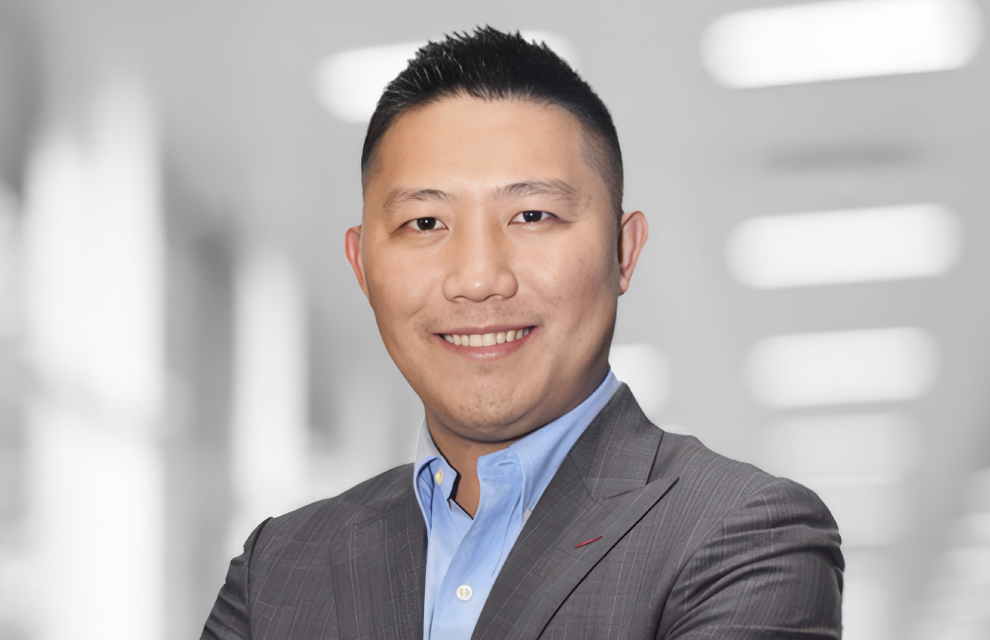 Image: Linnovate
How are fund and asset managers reshaping their operational strategies as AI shifts from experimentation to practical deployment across fund services? What barriers and hurdles have they been facing?
Over the past 12 months, there has been significant investment in operations, much of it focused on experimentation. However, fund and asset managers are now seeking clearer return on investment (ROI), which is driving a shift toward more practical and scalable AI deployments. While this transformation is still at an early stage, we continue to see investment momentum — ranging from the creation of ‘shadow’ AI roles and AI copilots to increased automation. I often refer to this phase as the transition from Stage I to Stage II of transformation.
Across core operational workflows, where is AI delivering the most meaningful improvements in accuracy, speed, and process reliability?
AI is improving a lot across our core workflows — things like retrieving information, extracting data, preparing content faster, and creating more generalised regulatory summaries. What is driving this is how AI connects human requests to automated tasks, basically turning broad human instructions into specific actions the system can perform. It is not just one step of the workflow, it touches almost everything. For example, instead of generating a report by navigating menus, you can now just ask a chatbot and get it instantly. It is all about making processes faster, more accurate, and easier to use.
Investor onboarding and KYC remain major friction points. How far can AI reduce timelines and manual intervention while maintaining strong risk controls?
Automation and better system integration are already delivering significant efficiency gains. If we look at the investor onboarding process as a whole, the fundamentals are: 1) understanding your client or investor, 2) meeting regulatory requirements, and 3) keeping accurate records.
AI-enabled optical character recognition (OCR) has been the biggest contributor so far, improving document processing outcomes significantly. Beyond that, much of the remaining work can be streamlined by defining regulatory structures in advance, which reduces the need for manual review while still maintaining strong risk controls.
With regulatory demands and compliance costs continuing to rise, how is AI easing the burden for managers?
In practice, AI helps by providing up-to-date comparisons of regulatory changes. Previously, analysing these differences required a lot of manual effort, so this capability adds significant value and makes it much easier for managers to adopt new requirements. The main limitation is that AI still needs fact-checking, but overall, it massively reduces the effort involved.
Fragmented data remains a structural challenge. How is AI helping managers build unified data environments and opening up more forward-looking insights?
This is a challenging area because building unified data environments requires a lot of foundational work. Ultimately, it comes down to ROI, and this is often an underestimated task. Managers should look for next-generation service providers and partners who do more than just provide extra hands, and who can help generate meaningful insights from the data they work with.
As AI absorbs repetitive processes, how is the role of fund administration teams shifting?
This is a fundamental shift in how fund administration teams operate.
Teams need to learn new ways of working, because what was productive in the past may no longer be effective in the future. It is about combining automation with retraining plans.
Traditionally, fund administration has been a resource-heavy business, but with the right technology, that is changing.
In our case, we have RAISE Technologies, our group’s proprietary technology platform. It offers fully integrated solutions across operational workflows, which has helped the Linnovate fund administration team restructure processes, optimise resource allocation, and adopt automation more effectively.
What does the future AI-enabled operating model look like? How and where is Linnovate developing AI solutions going forward?
The future of a services business lies in embedding technology into operations, rather than simply providing manpower. It is not just about administering tasks — it is about creating more value beyond resource allocation.
Of course, there will always be providers in the market focused on traditional outsourcing. At Linnovate, our technology roadmap is comprehensive.
AI development is focused on operational integration and interactive communication, helping us streamline processes and enhance engagement.
← Previous interview
n-Tier
Peter Gargone
Next interview →
Jersey Finance
Elliot Refson
.jpg)