Saphyre
Gabino Roche and Stephen Roche
04 Mar 2026
As mandatory US Treasury clearing reshapes post-trade infrastructure, Gabino Roche, CEO and founder at Saphyre, and Stephen Roche, president and co-founder at Saphyre, tell Zarah Choudhary that firms must move beyond compliance-driven repapering
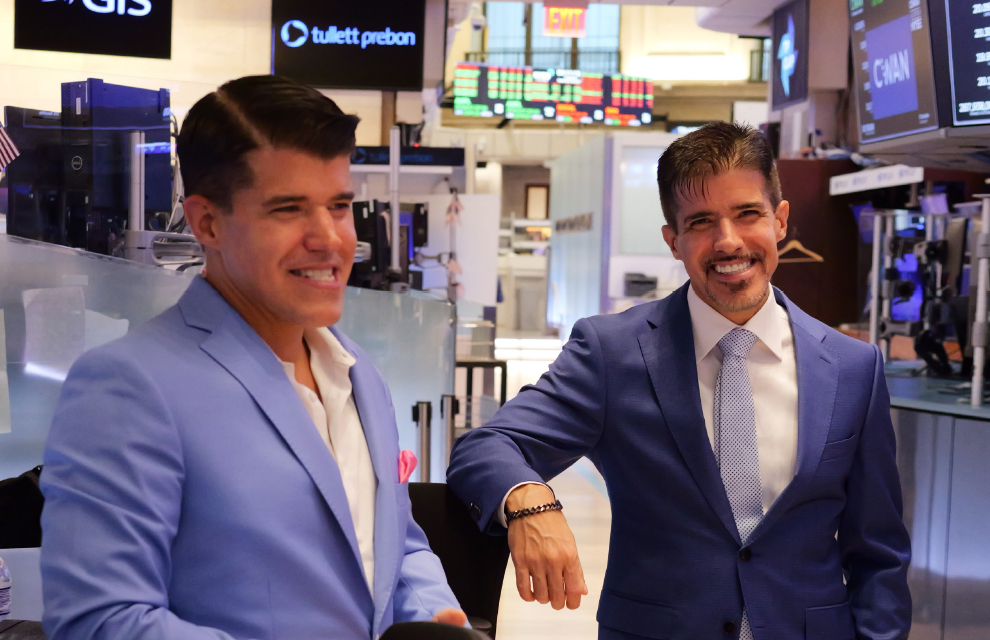 Image: Saphyre
For those who may not know Saphyre, can you give us a quick overview of who you are and the kinds of problems you have been solving in the market?
Stephen Roche: Saphyre focuses on trade readiness. For nearly a decade, we have worked across legal operations and risk technology teams to help firms become ready to trade faster. That means partnering with onboarding, legal, tax, Know Your Customer (KYC) and credit teams to synchronise data internally and across counterparties, so that account documentation, agreements and entities align before trading even begins.
While much of the industry has focused on fixing issues in post-trade, the reality is that the same gaps that delay readiness are the same gaps that delay settlement. Post-trade problems usually start as pre-trade misalignment, and if you are not ready upstream, you will feel the impact downstream.
Saphyre has been active across a lot of areas recently. Are you seeing common themes emerge, particularly around US Treasury clearing and securities lending?
Stephen Roche: What we are seeing is that US Treasury clearing and securities lending may look different on the surface, but they rely on the same foundation: legal clarity, accurate entity data and operational alignment.
In both cases, firms are asking: is this account eligible? Is this agreement valid? Are the entities properly mapped?
What is missing in most operational processes is what we describe as a Rosetta Stone layer of data mapping and normalisation — whether you are preparing to lend or preparing to clear. The core issue is whether there is a single reliable source of truth for this data. The market is realising that manual processes simply do not scale to meet that demand. Different mandates, same foundation.
Gabino Roche: Whether we are talking about traditional trading environments involving capital markets firms and their buy side clients, or a lending relationship between a lender and a borrower, the underlying problem is the same. It centres around KYC, tax, legal documentation and credit risk. It is fundamentally the same process.
We are effectively taking the same wheel and applying it to the US Treasury clearing mandate or to securities lending, including the agent lender disclosure (ALD) process.
When firms look at the US Treasury clearing mandate, what is the biggest challenge they tend to underestimate? How does that differ for the sell side versus the buy side?
Gabino Roche: The impact is significantly different between the buy side and the sell side. On the sell side, the biggest pain point sits with the clearing broker. The clearing broker is the member of the clearing houses, particularly the Fixed Income Clearing Corporation (FICC), which now requires mandatory clearing for US Treasuries.
Now, clearing brokers must formally paper sponsored membership agreements that include buy side firms and their underlying clients. They must do this for literally thousands of clients. Much of that work is still being done manually, and the resulting information must then be transmitted to FICC. Previously, this documentation did not need to be completed in this way. It becomes more complex because it is not just the sponsored membership agreements that need to be amended.
Firms must also ensure their repurchase agreements — typically governed by a Master Repurchase Agreement (MRA) or other general agreements — are updated. That creates a two-for-one exercise on the buy side.
Even after the initial repapering, the documentation must be maintained on an ongoing basis.
Clearing brokers are facing a massive volume problem with sponsored agreements. How does Saphyre help address that at scale?
Gabino Roche: The primary challenge is meeting the deadlines — repapering in time for the end of 2026 for US Treasuries and by early 2027 for repurchase agreements. That is where scale becomes critical.
We are also working with several clearing counterparties to provide a streamlined, straight-through processing (STP), fully digitised and integrated process between clearing brokers and clearing houses. You will be hearing more specifically around direct integration and bulk updates for sponsored agreements very shortly.
You both talk about ‘intelligent’ automation in many of your thought leadership pieces. When it comes to the US Treasury clearing mandate, where does intelligence make the biggest impact?
Gabino Roche: It is easy to talk about automation, but automation alone can create mistakes if it lacks intelligence. Intelligent automation involves remembering trading relationships, clearing relationships, custodial relationships, lending relationships and platform relationships.
Saphyre maps the beneficial owner to the investment manager entity, to the clearing broker entity, to the sponsored agreement, and to the Master Repurchase Agreement, and then transmits the relevant information to FICC. That ensures firms are both clear-ready and trade-ready. Those are critical components because they underpin settlement guarantees.
Would you also say this automated intelligence has a place in the securities lending space, especially when it comes to ALD concerns?
Gabino Roche: ALD process is often discussed from two angles: onboarding and ongoing maintenance. Many large lenders operate omnibus accounts, where the underlying beneficial owner is not immediately visible.
However, many of these firms already use Saphyre within the custody workflow. The KYC and tax reviews have already been completed, and the data has already been collected. There is no need to duplicate that work for securities lending if the system intelligently remembers it.
Intelligent automation allows the know your customer, tax and legal documentation processes to move through straight-through processing. That leaves credit risk as the main remaining bottleneck. By providing structured, reliable data to borrowers, we can help accelerate their credit risk assessments.
Beyond onboarding, the same scalable infrastructure applies to the ongoing ALD process, where credit status and documentation must be monitored continuously.
From what we understand, the onboarding process in securities lending is painfully long and still highly manual. What do you see as the best way to streamline this?
Gabino Roche: The question becomes: are you ready to lend? The process is fundamentally similar to trade readiness.
We already work directly with beneficial owners in the custody context, so clients do not need to resubmit the same documentation. We remember that information and reuse it within the lending workflow.
Ultimately, it is about getting firms ready to lend in the same way we help them become ready to trade.
Speaking of workflows, there are initiatives ongoing and completed in every firm. How is Saphyre differentiating itself from other SaaS workflows in the finance space to assist in securities lending or any other finance application?
Stephen Roche: Most workflow solutions focus on managing tasks and moving information from one point to another.
The difference with Saphyre is memory and synchronisation.
We do not simply automate steps; we maintain trading relationships between entities, accounts, agreements and counterparties from onboarding through to settlement.
We are not just mapping processes — we are maintaining data integrity and operational readiness.
Firms can connect to our intelligence layer without having to replace their existing systems. Automation only works when it remembers.
Gabino Roche: Many SaaS platforms operate bilaterally — they assume the two direct users are the owners of the data. In reality, beneficial owners and third parties sit behind those users.
Saphyre creates structured placeholders for those parties, even when they are not directly on the platform.
That is how we preserve data integrity and reflect the true multi-party relationships within the market.
Any parting statements you would like to make before we conclude our discussion?
Stephen Roche: The market is entering a period where scale and transparency are non-negotiable.
Regulations such as US Treasury clearing and the pressures in securities lending may appear temporary, but they signal a structural shift.
Firms that invest in readiness infrastructure now will operate with greater confidence, reduced risk and increased agility in the years ahead. Readiness is no longer a one-time event — it is an operating model.
Gabino Roche: Saphyre is also undergoing a data normalisation process. Human behaviour is inconsistent — firms describe and structure information differently, and that nuance is rarely documented. Artificial intelligence cannot simply read a manual and understand how a particular firm has operated for decades.
By normalising data and layering artificial intelligence on top, Saphyre can support a multi-protocol, agnostic approach.
Whether firms operate using ISO standards, Financial Information eXchange (FIX) protocol, SWIFT messaging, or distributed ledger and smart contract frameworks, we can meet them where they are.
That flexibility is what ultimately supports firms as they transition towards blockchain and more modern market infrastructure.
← Previous interview
FINBOURNE Technology
Toby Glaysher
Next interview →
MUFG Investor Services
Daniel Trentacosta
.jpg)