Clearstream
Patrick Kropp
30 Sep 2026
Patrick Kropp, settlement product manager at Clearstream, discusses his journey into asset servicing, the value of bringing fresh perspectives to a complex industry, and why standardisation, interoperability, and new technologies will be central to the future of financial market infrastructure
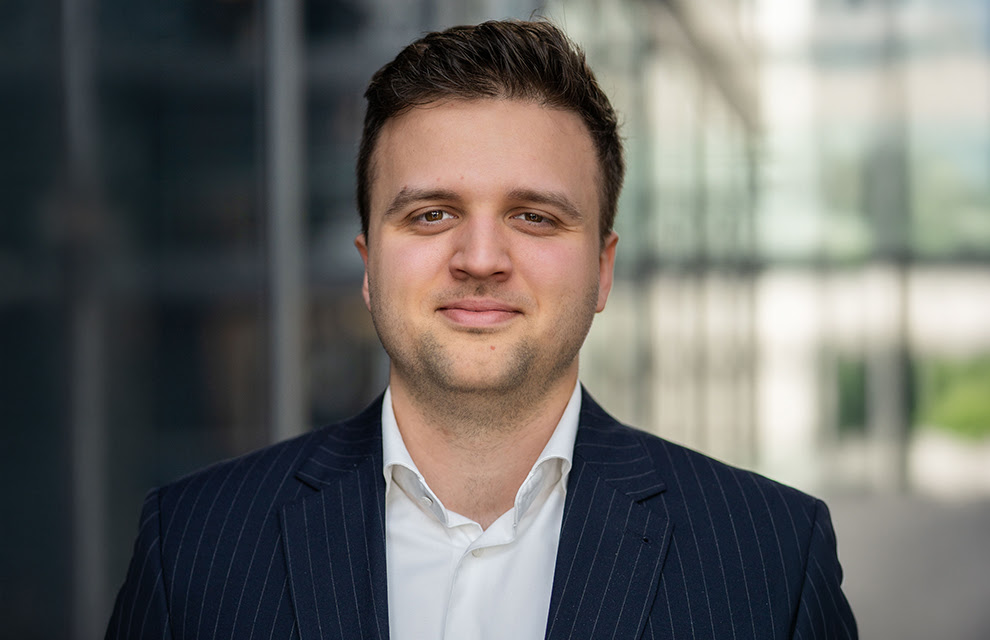 Image: Clearstream
Can you give us an insight into your personal journey into the asset services industry, why did you decide this was the career for you?
My interest in financial markets started through investing and following developments across different asset classes.
While many people are attracted by trading and market movements, I became increasingly curious about what happens behind the scenes. The more I learned, the more I realised that trading is only one part of a much larger ecosystem that enables markets to operate safely and efficiently.
Through roles across Deutsche Börse Group in treasury, clearing, and Clearstream’s post-trade services, I gradually developed a deeper understanding of the infrastructure that underpins financial markets and enables the lifecycle of a security beyond trading.
What ultimately drew me to asset servicing was the combination of complexity, scale, and real-world impact. As the underlying backbone, it plays a critical role in connecting issuers, investors, and market infrastructures while ensuring the smooth functioning of capital markets.
More recently, the emergence of distributed ledger technology has added a new dimension to my work as a product manager at Clearstream. Today, I am particularly motivated by helping bridge established market infrastructures with new technologies and contributing to the future evolution of asset servicing.
What aspects of your job do you enjoy the most?
The complexity of financial market infrastructures is something that continues to fascinate me. Bringing together technology, regulation, and business needs means there is always something new to learn, and no two projects are the same.
What I enjoy most about my job is the opportunity to take ownership early in my career and be trusted to lead and contribute to important initiatives that have the potential to shape the future of financial markets. For example, I have been co-leading key workstreams in Clearstream’s participation in the ECB trials.
This has allowed me to help turn innovative concepts into real-world solutions, accelerating my professional growth, and enabling me to make a meaningful impact.
Being fairly new to the industry, how do you find your experience compares to those who are more established? Are there pros and cons to each?
The most engaging challenge has been developing a deep understanding of the many specialised processes that underpin asset servicing while maintaining a broader perspective on industry trends and strategic objectives.
At the same time, being relatively early in my career allows me to bring a fresh perspective, to embrace new technologies, and to challenge established ways of thinking.
I believe the best results come from combining both perspectives.
Have you noticed any misconceptions about the asset servicing industry?
One common misconception is that the asset servicing industry is moving slowly and is resistant to change.
A more nuanced view is that it operates in a highly complex and interconnected environment involving many different participants, each with their own responsibilities, priorities, and regulatory requirements.
But this does not mean standing still.
Looking at current developments in digitisation and data usage demonstrates that asset servicing is undergoing a period of innovation and transformation.
Is there anything in the industry you would like to see evolve or change?
One of the developments I would like to see is a stronger industry-wide focus on standardisation and interoperability when adopting new technologies such as distributed ledger technology.
The financial industry has made significant investments in modernising market infrastructure, but experience has shown that technology alone does not automatically deliver efficiency gains.
The real benefits are unlocked when market participants align on common standards, processes, and operating models.
What is the training process of a new employee? Do you think it was beneficial to your role and others who may now be in the same position you were?
New employees at Clearstream typically go through a well-structured onboarding with role-specific learning programmes.
In addition, I was fortunate to have experienced colleagues who played an active role in my onboarding and development whenever I took on a new position.
There was always time for questions, guidance, and mentoring. In my experience, access to knowledgeable colleagues is one of the most valuable parts of the onboarding process.
In terms of your career, where do you see yourself in a decade?
A decade is a long time when it comes to career planning. Rather than focusing on a specific role, I am more interested in continuing to learn, grow, and take on new challenges.
Looking ahead, I would like to be in a position where I can make meaningful decisions, contribute to the strategic direction of the industry and help to shape the evolution of market infrastructure.
I am also passionate about sharing the experience I have gained along the way. Whether through industry initiatives, collaboration with market participants, or mentoring colleagues, I would like to contribute to the development of the next generation of professionals in asset servicing.
Ultimately, I hope to combine industry leadership with a commitment to developing both people and markets.
What advice would you give to young graduates when entering the financial services field?
Learn continuously and leverage mentorship: learning from people who have spent years in the industry can significantly accelerate both your professional development and your understanding of the bigger picture.
Step outside your comfort zone: some of the biggest learning experiences come from tackling challenges that initially seem unsolvable. You do not need to be the most experienced or senior person in the room to add value.
Build relationships across functions: asset servicing is highly interconnected, and developing an end-to-end understanding of the ecosystem helps you see the bigger picture and collaborate more effectively.
← Previous interview
Calastone
Simon Keefe
Next interview →
FundGuard
Lior Yogev