.jpg)

Poland: New definition of success
Feb 2026
Maciej Trybuchowski, CEO at KDPW, examines how Poland’s post-1989 economic transformation has reshaped its capital markets, and why strong post-trade infrastructure and targeted innovation are now central to the country’s next phase of investment-led growth
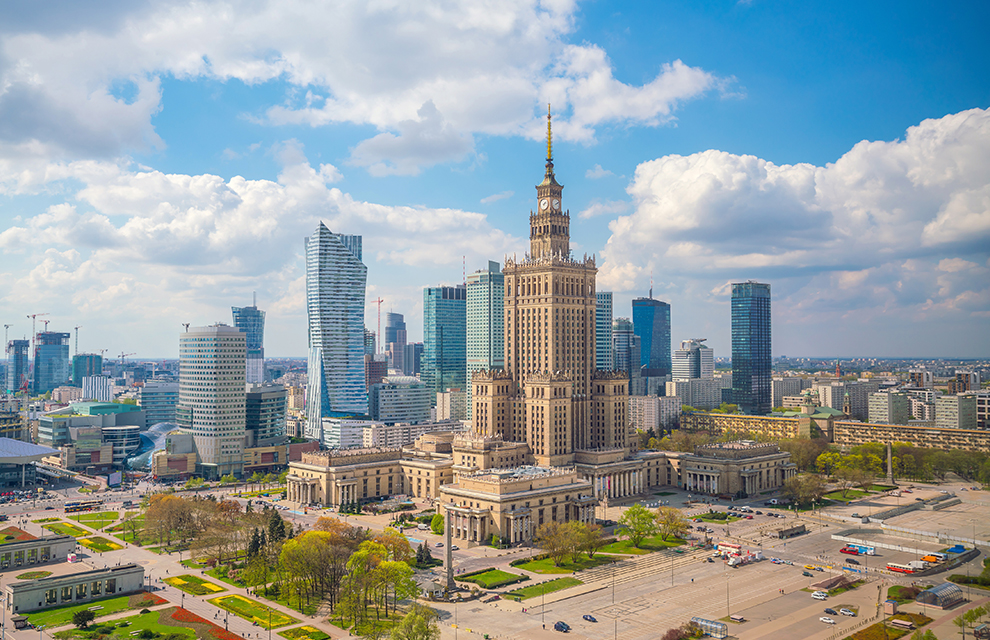 Image: f11photo/stock.adobe.com
Poland’s economic transition after 1989 is widely recognised as one of the greatest successes of change in Central and Eastern Europe. As a result, Poland has become part of the West and joined high-income countries according to the World Bank. Poland’s nominal GDP in 2025 reached that of Switzerland.
Poland has become attractive for foreign investors — domestic exporters have gained international recognition and Polish exports are now technologically advanced. In recent decades, Poland has moved up 31 places in terms of GDP per capita in purchasing power parity. In the 1990s, Poland ranked low at 75th position by foreign direct investment inflows; in 2023, Poland was among the top 10 most attractive economies for investment.
With its successful transition, Poland has fully integrated into global trade and the European Union, opening its borders to trade, investment, and the free movement of people and capital.
The Polish economy enjoyed a solid recovery in 2025, with GDP growth forecasts around 3.2–3.7 per cent, driven mainly by domestic demand, household consumption, and public investment. Economic growth places Poland at the forefront of European Union member states.
Capital market
The Polish capital market is the largest in Central and Eastern Europe, an icon of economic transition, and proof that a country aspiring to have a modern economy needs an efficient financial market. Today, despite dynamic global changes, the Polish capital market remains a space of stability, competitiveness, and opportunity for investors and businesses.
One of the greatest advantages of the Polish capital market is its transparency and institutional maturity. Public company reporting standards, mandatory disclosures, and strict corporate governance rules make up an environment that is demanding but inspires confidence.
Another advantage is the diversity of instruments and market segments. Alongside traditional stocks and bonds, the market offers ETFs, structured certificates, and futures contracts, which let investors build long-term portfolios and actively manage risks. The growth of the Catalyst market has opened access to corporate debt, while NewConnect is a natural platform for young, innovative companies seeking growth financing other than expensive bank loans.
It is also important to note the growing role of individual investors whose activity has increased particularly since 2020. Individual investors generate 13 per cent of equity trading on the Warsaw Stock Exchange. Assets accumulated in private pension plans are also steadily growing. Over half of investors declaring that saving for retirement is one of the reasons for their capital market activity.
The capital market is equally important to businesses. For many companies, going public is not only a way to raise capital but also a means of building credibility and market position. Listing on the Warsaw Stock Exchange ensures visibility, facilitates foreign expansion, and raises governance standards. Importantly, the capital market supports not only giants: it is often a key choice for medium-sized companies which cannot reach large institutional investors but want to grow fast.
The Polish market has yet another important advantage: its local profile combined with openness to international capital. Warsaw remains the gateway to Central and Eastern Europe, attracting foreign investors who look for stable but promising emerging markets. The presence of such investors supports liquidity and improves local investment standards.
Recent years have brought a boom to the Polish capital market. In 2025 the WIG20 (Blue Chip) index gained 45 per cent and the WIG index over 47 percent, crossing the symbolic mark of 100,000 points. In the first half of 2025, GPW Main Market turnover reached 470 billion Polish zloty (US$134 billion), an increase of over 42 percent year-on-year (YoY). These figures show that Poland is an attractive market for domestic and foreign investors. The latter account for 70 percent of equity trading on GPW.
Post-trade Infrastructure
Poland boasts a well-developed capital market infrastructure, including trading (Warsaw Stock Exchange) and post-trading. The latter is provided by the KDPW Group: Poland’s central securities depository (KDPW) and the clearing house KDPW_CCP, which offer a range of specialised services for the financial sector.
For over 30 years now, the KDPW Group has been a key service provider and offers recording, safe-keeping, clearing, and settlement of securities. Alongside the traditional services of a central depository and clearing house, the KDPW Group provides financial market participants with a range of additional solutions, such as the EMIR and SFTR trade repositories, ISIN, FISN, and CFI numbering agency services, LEI issuance, identification of shareholders of public and non-public companies, a register of issuers’ obligations, a data portal, and remote voting applications.
Over the past few years, in a dynamically changing market and regulatory environment, the KDPW Group has developed a complementary package of services which meet the contemporary requirements of the most developed financial hubs, obtained authorisations for its services, and successfully expanded its offering beyond Poland.
In 2025 KDPW was implementing the CSDonDLT project which aims to gauge the impact and added value of implementing solutions based on distributed ledger technology (DLT) in central securities depository services. The first step in this direction is to create a solution to enable the settlement of OTC transactions using blockchain. Blockchain allows to redefine and create new models for the safe-keeping and transfer of assets and to build trust between market participants in a shared distributed IT solution.
This project is an important step towards the modernisation and development of the domestic capital market infrastructure, responding both to global trends and to initiatives undertaken by other European markets in the implementation of innovative technologies and new business and operating models.
In the face of dynamic regulatory and technological changes, Poland has an opportunity to develop its own complementary capital market model which on the one hand takes into account local specificities and on the other hand is open to cross-border applications. We are ready to play a leading role in this process, and we invite market institutions to jointly design a future based on a modern, secure and competitive capital market infrastructure.
Poland has become attractive for foreign investors — domestic exporters have gained international recognition and Polish exports are now technologically advanced. In recent decades, Poland has moved up 31 places in terms of GDP per capita in purchasing power parity. In the 1990s, Poland ranked low at 75th position by foreign direct investment inflows; in 2023, Poland was among the top 10 most attractive economies for investment.
With its successful transition, Poland has fully integrated into global trade and the European Union, opening its borders to trade, investment, and the free movement of people and capital.
The Polish economy enjoyed a solid recovery in 2025, with GDP growth forecasts around 3.2–3.7 per cent, driven mainly by domestic demand, household consumption, and public investment. Economic growth places Poland at the forefront of European Union member states.
Capital market
The Polish capital market is the largest in Central and Eastern Europe, an icon of economic transition, and proof that a country aspiring to have a modern economy needs an efficient financial market. Today, despite dynamic global changes, the Polish capital market remains a space of stability, competitiveness, and opportunity for investors and businesses.
One of the greatest advantages of the Polish capital market is its transparency and institutional maturity. Public company reporting standards, mandatory disclosures, and strict corporate governance rules make up an environment that is demanding but inspires confidence.
Another advantage is the diversity of instruments and market segments. Alongside traditional stocks and bonds, the market offers ETFs, structured certificates, and futures contracts, which let investors build long-term portfolios and actively manage risks. The growth of the Catalyst market has opened access to corporate debt, while NewConnect is a natural platform for young, innovative companies seeking growth financing other than expensive bank loans.
It is also important to note the growing role of individual investors whose activity has increased particularly since 2020. Individual investors generate 13 per cent of equity trading on the Warsaw Stock Exchange. Assets accumulated in private pension plans are also steadily growing. Over half of investors declaring that saving for retirement is one of the reasons for their capital market activity.
The capital market is equally important to businesses. For many companies, going public is not only a way to raise capital but also a means of building credibility and market position. Listing on the Warsaw Stock Exchange ensures visibility, facilitates foreign expansion, and raises governance standards. Importantly, the capital market supports not only giants: it is often a key choice for medium-sized companies which cannot reach large institutional investors but want to grow fast.
The Polish market has yet another important advantage: its local profile combined with openness to international capital. Warsaw remains the gateway to Central and Eastern Europe, attracting foreign investors who look for stable but promising emerging markets. The presence of such investors supports liquidity and improves local investment standards.
Recent years have brought a boom to the Polish capital market. In 2025 the WIG20 (Blue Chip) index gained 45 per cent and the WIG index over 47 percent, crossing the symbolic mark of 100,000 points. In the first half of 2025, GPW Main Market turnover reached 470 billion Polish zloty (US$134 billion), an increase of over 42 percent year-on-year (YoY). These figures show that Poland is an attractive market for domestic and foreign investors. The latter account for 70 percent of equity trading on GPW.
Post-trade Infrastructure
Poland boasts a well-developed capital market infrastructure, including trading (Warsaw Stock Exchange) and post-trading. The latter is provided by the KDPW Group: Poland’s central securities depository (KDPW) and the clearing house KDPW_CCP, which offer a range of specialised services for the financial sector.
For over 30 years now, the KDPW Group has been a key service provider and offers recording, safe-keeping, clearing, and settlement of securities. Alongside the traditional services of a central depository and clearing house, the KDPW Group provides financial market participants with a range of additional solutions, such as the EMIR and SFTR trade repositories, ISIN, FISN, and CFI numbering agency services, LEI issuance, identification of shareholders of public and non-public companies, a register of issuers’ obligations, a data portal, and remote voting applications.
Over the past few years, in a dynamically changing market and regulatory environment, the KDPW Group has developed a complementary package of services which meet the contemporary requirements of the most developed financial hubs, obtained authorisations for its services, and successfully expanded its offering beyond Poland.
In 2025 KDPW was implementing the CSDonDLT project which aims to gauge the impact and added value of implementing solutions based on distributed ledger technology (DLT) in central securities depository services. The first step in this direction is to create a solution to enable the settlement of OTC transactions using blockchain. Blockchain allows to redefine and create new models for the safe-keeping and transfer of assets and to build trust between market participants in a shared distributed IT solution.
This project is an important step towards the modernisation and development of the domestic capital market infrastructure, responding both to global trends and to initiatives undertaken by other European markets in the implementation of innovative technologies and new business and operating models.
In the face of dynamic regulatory and technological changes, Poland has an opportunity to develop its own complementary capital market model which on the one hand takes into account local specificities and on the other hand is open to cross-border applications. We are ready to play a leading role in this process, and we invite market institutions to jointly design a future based on a modern, secure and competitive capital market infrastructure.
NO FEE, NO RISK
100% ON RETURNS If you invest in only one asset servicing news source this year, make sure it is your free subscription to Asset Servicing Times
100% ON RETURNS If you invest in only one asset servicing news source this year, make sure it is your free subscription to Asset Servicing Times