.jpg)

The tokenisation marathon
01 Apr 2026
Ziv Keinan, founder of STG Security Token Community and head of markets and partnerships at XDC Network, speaks with Asset Servicing Times about the evolving institutional adoption of tokenised real-world assets and the role of stablecoins in financial infrastructure
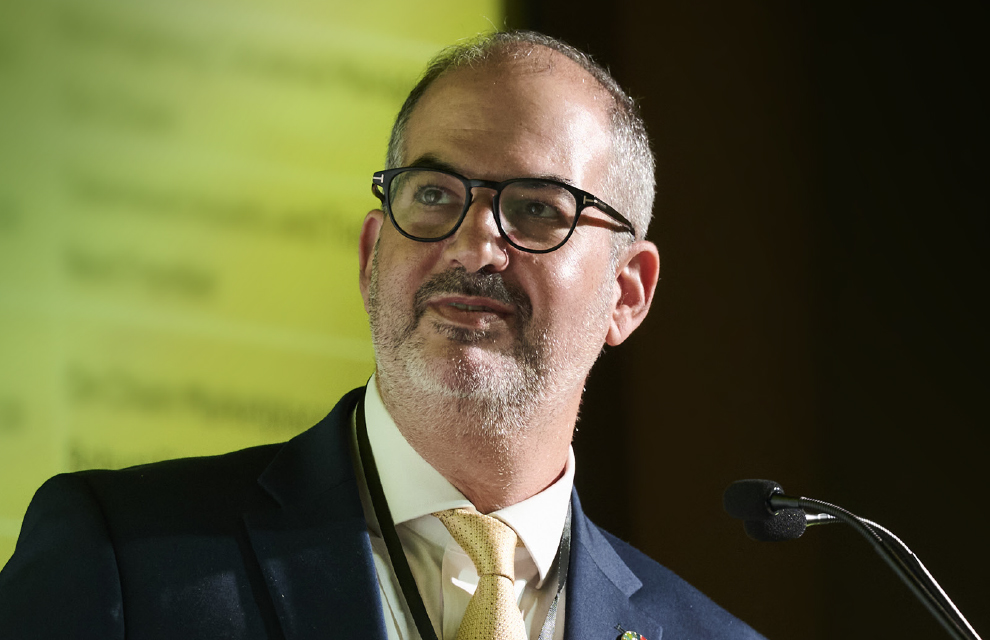 Image: STG Security Token Community
The conversation around tokenised real-world assets (RWAs) has evolved rapidly in recent years.
Once largely confined to proofs of concept and experimental pilots, the tokenisation of financial assets is now beginning to appear in live issuance and institutional initiatives across multiple markets.
For Ziv Keinan, founder of the STG Security Token Community and head of markets and partnerships at XDC Network, says this shift reflects the early stages of genuine industry adoption rather than continued experimentation.
“I don’t think we are starting from a place where there is no adoption,” Keinan explains. “Until now we had barriers that were mostly regulatory. The US, for example, was not really keen about digital assets. They maintained the dominance of the dollar through USDC and digital dollars, but they were hesitant about opening the door for institutions to participate.”
He argues that a change in regulatory tone is beginning to alter that dynamic. According to Keinan, the current US administration has signalled a willingness to stabilise the digital asset environment and encourage institutional participation.
“The administration has effectively said that this technology is the future of finance and that they want institutions to be active in this space,” he notes. “They want small investors — the ‘mom and pop’ investors — to invest through institutions like BlackRock rather than through platforms such as FTX.”
As a result, Keinan believes the industry is now entering a gradual adoption phase. “Within financial services these things take time. But many of the largest barriers that existed previously have already been addressed, and we are starting to see real signs of adoption.”
Institutional momentum and competitive pressure
Through the STG community, Keinan works with exchanges, asset managers, banks, and technology providers that are actively exploring tokenisation. Founded in 2018, the network brings together approximately 250 senior executives across the digital securities ecosystem.
“STG is essentially a community of C-level executives who are building solutions, issuing digital assets or exploring how to operate in this space,” he explains. “Because there is a lot of marketing in this industry, it can sometimes be difficult to understand what is actually happening and what is just narrative.”
The community therefore acts as a forum for private discussions between participants before those ideas are eventually brought to public events. Within those discussions,
Keinan says institutional commitment is becoming increasingly visible — and increasingly competitive.
“We believe there is real commitment,” he says.
“But we are still at the beginning of the process. What happens in finance is that once one major institution launches something successfully, everyone else starts thinking they need to be there as well.”
He points to examples such as asset managers launching blockchain-based funds.
“If one asset manager issues an asset on blockchain, then others immediately start asking whether they should do the same. J.P. Morgan has launched a money market fund on Base. Citi is developing its own initiatives. NatWest is developing. Lloyds is developing. Everyone is moving.”
He adds that the same competitive dynamic is visible in the development of stablecoins.
“Stablecoins represent a form of money market fund and they offer significant financial opportunities,” he says.
“Now that they are becoming regulated in the US, we are seeing asset managers becoming fully committed to issuing them.”
Recent announcements, he notes, illustrate the pace of this shift.
“We have seen institutions like Fidelity exploring issuance, and banks such as BNY are also following with their own digital asset initiatives. So this is not only commitment anymore — it is competition.”
Enterprise blockchain infrastructure
Keinan also highlights the growing role of enterprise blockchain infrastructure in enabling tokenisation initiatives.
XDC Network, where he leads markets and partnerships, has positioned itself as a blockchain platform focused on trade finance and RWA tokenisation.
“The way blockchain works is that you have a block of data that contains the history of all previous blocks,” he explains.
“As long as the chain continues to operate, it becomes more secure and more mature over time.” This longevity, he argues, gives early networks a structural advantage. “That is why Ethereum and XDC have advantages today. They have been operating for a long time and the infrastructure has matured.”
The network also differentiates itself through its enterprise focus.
“XDC has always focused on real-world applications,” he says.
“You did not have NFTs trading on XDC or speculative activity of that type. The network was originally developed for trade finance use cases such as shipping, bills of lading, and bills of exchange.”
This practical orientation, he adds, has kept the platform somewhat under the radar compared with more speculative crypto ecosystems.
“But it means that the network was always designed for real-world asset applications.”
Stablecoins as financial plumbing
One of the most significant developments in the tokenisation ecosystem is the emergence of stablecoins as a potential settlement layer.
For Keinan, this transition is already underway. “Stablecoins are already being used for cross-border transactions,” he says. “Large companies are using them to balance treasury positions between subsidiaries in different jurisdictions.”
In a multinational organisation with operations in locations such as Singapore, Hong Kong, the US, and London, stablecoins can allow funds to move between entities at significantly lower cost than traditional banking channels.
But Keinan also sees an unexpected driver accelerating adoption: AI.
“When AI agents start interacting with the economy, they need a payment mechanism,” he explains. “An AI agent cannot go to a bank and open an account. But it can own a digital wallet and pay with stablecoins.”
As a result, he believes AI-driven automation will increase the demand for blockchain-based payment systems.
“We think AI will accelerate the use of stablecoins even further.”
Implications for custody and market infrastructure
The convergence of tokenised assets and stablecoin settlement could also reshape traditional financial market infrastructure.
While Keinan does not necessarily predict the disappearance of central securities depositories (CSDs), he does expect their role to evolve.
“A smart contract can perform many of the functions that are currently handled by third parties such as custodians,” he says. “So what we will likely see is an evolution of the model.”
Some infrastructure providers are already exploring these possibilities.
“Euroclear, for example, is looking at how blockchain could integrate with existing systems,” Keinan notes. “We may see convergence between traditional infrastructure and blockchain-based solutions.”
Privacy, cybersecurity, and operational risk
Despite the growing institutional interest, concerns around privacy and cybersecurity remain central to adoption.
Distributed ledgers are inherently transparent systems, which raises questions about how regulated financial institutions can protect sensitive trading data.
According to Keinan, however, cryptographic technologies are rapidly addressing these concerns.
“There are already technologies that provide very high levels of privacy while still allowing institutions to benefit from decentralised blockchains such as Ethereum or XDC,” he says.
Developments in cryptography and privacy solutions, he argues, are enabling hybrid models where transparency and confidentiality can coexist. Cybersecurity remains a separate challenge.
“In blockchain systems, all the code is visible to everyone,” he explains. “That means if someone — or even an automated agent — identifies a vulnerability in the code, they could potentially exploit it very quickly.”
This environment requires continuous monitoring rather than traditional static security reviews.
“Runtime cybersecurity is essential,” he says. “It needs to operate like a firewall that protects systems constantly. Blockchain is a highly adversarial environment and people need to be careful when moving value onchain.”
Regulation and legal frameworks
Keinan’s perspective on digital securities is also shaped by his legal background. While existing securities laws can accommodate tokenisation in principle, he argues they are not always structured to capture the full benefits of blockchain-based issuance. “You can tokenise assets under the current legal framework,” he explains. “But you cannot extract the full value of the technology under those frameworks.” He points to the early era of initial coin offerings (ICOs) as an example of how blockchain enabled global fundraising and near-instant settlement.
“Investors from Singapore, India, or London could buy tokens instantly and settlement happened immediately,” he says. However, the absence of regulatory alignment across jurisdictions created compliance challenges.
“If a token represents a security, it must comply with the securities laws of every jurisdiction where investors are located,” he explains. “Each country has its own securities laws, which makes global fundraising extremely complicated.”
As a result, Keinan believes further regulatory harmonisation will be required to unlock the full potential of tokenised markets.
“The essence of a security is the same whether it is recorded on an Excel spreadsheet or on a blockchain,” he says.
“But if you want to fully use the advantages of blockchain — such as instant settlement — then additional legislation and coordination between jurisdictions will be necessary.”
The road to onchain finance
Looking ahead, Keinan expects tokenised assets to move beyond niche markets and become embedded within mainstream financial infrastructure.
“The pace of development is exponential,” he says. “Even compared with last year, the progress has exceeded expectations.”
By the end of 2026, he anticipates a much wider range of financial products being issued on blockchain networks.
“We will see more products coming onchain, and we will also see traditional exchanges such as Nasdaq, the New York Stock Exchange, and the London Stock Exchange launching blockchain-based products.”
Ultimately, Keinan expects a convergence between traditional financial infrastructure and blockchain-based systems.
“Once stablecoins are widely used onchain and investors are holding them, they will want yield-bearing products to invest in,” he says. “That means more financial products will be issued directly on blockchain networks.”
At that point, he argues, the efficiency gains will make a return to traditional systems unlikely.
“It is similar to mobile payments,” he concludes. “Once you start paying everywhere with your phone and see how efficient it is, you do not go back. The same dynamic will apply to blockchain in financial markets.”
Once largely confined to proofs of concept and experimental pilots, the tokenisation of financial assets is now beginning to appear in live issuance and institutional initiatives across multiple markets.
For Ziv Keinan, founder of the STG Security Token Community and head of markets and partnerships at XDC Network, says this shift reflects the early stages of genuine industry adoption rather than continued experimentation.
“I don’t think we are starting from a place where there is no adoption,” Keinan explains. “Until now we had barriers that were mostly regulatory. The US, for example, was not really keen about digital assets. They maintained the dominance of the dollar through USDC and digital dollars, but they were hesitant about opening the door for institutions to participate.”
He argues that a change in regulatory tone is beginning to alter that dynamic. According to Keinan, the current US administration has signalled a willingness to stabilise the digital asset environment and encourage institutional participation.
“The administration has effectively said that this technology is the future of finance and that they want institutions to be active in this space,” he notes. “They want small investors — the ‘mom and pop’ investors — to invest through institutions like BlackRock rather than through platforms such as FTX.”
As a result, Keinan believes the industry is now entering a gradual adoption phase. “Within financial services these things take time. But many of the largest barriers that existed previously have already been addressed, and we are starting to see real signs of adoption.”
Institutional momentum and competitive pressure
Through the STG community, Keinan works with exchanges, asset managers, banks, and technology providers that are actively exploring tokenisation. Founded in 2018, the network brings together approximately 250 senior executives across the digital securities ecosystem.
“STG is essentially a community of C-level executives who are building solutions, issuing digital assets or exploring how to operate in this space,” he explains. “Because there is a lot of marketing in this industry, it can sometimes be difficult to understand what is actually happening and what is just narrative.”
The community therefore acts as a forum for private discussions between participants before those ideas are eventually brought to public events. Within those discussions,
Keinan says institutional commitment is becoming increasingly visible — and increasingly competitive.
“We believe there is real commitment,” he says.
“But we are still at the beginning of the process. What happens in finance is that once one major institution launches something successfully, everyone else starts thinking they need to be there as well.”
He points to examples such as asset managers launching blockchain-based funds.
“If one asset manager issues an asset on blockchain, then others immediately start asking whether they should do the same. J.P. Morgan has launched a money market fund on Base. Citi is developing its own initiatives. NatWest is developing. Lloyds is developing. Everyone is moving.”
He adds that the same competitive dynamic is visible in the development of stablecoins.
“Stablecoins represent a form of money market fund and they offer significant financial opportunities,” he says.
“Now that they are becoming regulated in the US, we are seeing asset managers becoming fully committed to issuing them.”
Recent announcements, he notes, illustrate the pace of this shift.
“We have seen institutions like Fidelity exploring issuance, and banks such as BNY are also following with their own digital asset initiatives. So this is not only commitment anymore — it is competition.”
Enterprise blockchain infrastructure
Keinan also highlights the growing role of enterprise blockchain infrastructure in enabling tokenisation initiatives.
XDC Network, where he leads markets and partnerships, has positioned itself as a blockchain platform focused on trade finance and RWA tokenisation.
“The way blockchain works is that you have a block of data that contains the history of all previous blocks,” he explains.
“As long as the chain continues to operate, it becomes more secure and more mature over time.” This longevity, he argues, gives early networks a structural advantage. “That is why Ethereum and XDC have advantages today. They have been operating for a long time and the infrastructure has matured.”
The network also differentiates itself through its enterprise focus.
“XDC has always focused on real-world applications,” he says.
“You did not have NFTs trading on XDC or speculative activity of that type. The network was originally developed for trade finance use cases such as shipping, bills of lading, and bills of exchange.”
This practical orientation, he adds, has kept the platform somewhat under the radar compared with more speculative crypto ecosystems.
“But it means that the network was always designed for real-world asset applications.”
Stablecoins as financial plumbing
One of the most significant developments in the tokenisation ecosystem is the emergence of stablecoins as a potential settlement layer.
For Keinan, this transition is already underway. “Stablecoins are already being used for cross-border transactions,” he says. “Large companies are using them to balance treasury positions between subsidiaries in different jurisdictions.”
In a multinational organisation with operations in locations such as Singapore, Hong Kong, the US, and London, stablecoins can allow funds to move between entities at significantly lower cost than traditional banking channels.
But Keinan also sees an unexpected driver accelerating adoption: AI.
“When AI agents start interacting with the economy, they need a payment mechanism,” he explains. “An AI agent cannot go to a bank and open an account. But it can own a digital wallet and pay with stablecoins.”
As a result, he believes AI-driven automation will increase the demand for blockchain-based payment systems.
“We think AI will accelerate the use of stablecoins even further.”
Implications for custody and market infrastructure
The convergence of tokenised assets and stablecoin settlement could also reshape traditional financial market infrastructure.
While Keinan does not necessarily predict the disappearance of central securities depositories (CSDs), he does expect their role to evolve.
“A smart contract can perform many of the functions that are currently handled by third parties such as custodians,” he says. “So what we will likely see is an evolution of the model.”
Some infrastructure providers are already exploring these possibilities.
“Euroclear, for example, is looking at how blockchain could integrate with existing systems,” Keinan notes. “We may see convergence between traditional infrastructure and blockchain-based solutions.”
Privacy, cybersecurity, and operational risk
Despite the growing institutional interest, concerns around privacy and cybersecurity remain central to adoption.
Distributed ledgers are inherently transparent systems, which raises questions about how regulated financial institutions can protect sensitive trading data.
According to Keinan, however, cryptographic technologies are rapidly addressing these concerns.
“There are already technologies that provide very high levels of privacy while still allowing institutions to benefit from decentralised blockchains such as Ethereum or XDC,” he says.
Developments in cryptography and privacy solutions, he argues, are enabling hybrid models where transparency and confidentiality can coexist. Cybersecurity remains a separate challenge.
“In blockchain systems, all the code is visible to everyone,” he explains. “That means if someone — or even an automated agent — identifies a vulnerability in the code, they could potentially exploit it very quickly.”
This environment requires continuous monitoring rather than traditional static security reviews.
“Runtime cybersecurity is essential,” he says. “It needs to operate like a firewall that protects systems constantly. Blockchain is a highly adversarial environment and people need to be careful when moving value onchain.”
Regulation and legal frameworks
Keinan’s perspective on digital securities is also shaped by his legal background. While existing securities laws can accommodate tokenisation in principle, he argues they are not always structured to capture the full benefits of blockchain-based issuance. “You can tokenise assets under the current legal framework,” he explains. “But you cannot extract the full value of the technology under those frameworks.” He points to the early era of initial coin offerings (ICOs) as an example of how blockchain enabled global fundraising and near-instant settlement.
“Investors from Singapore, India, or London could buy tokens instantly and settlement happened immediately,” he says. However, the absence of regulatory alignment across jurisdictions created compliance challenges.
“If a token represents a security, it must comply with the securities laws of every jurisdiction where investors are located,” he explains. “Each country has its own securities laws, which makes global fundraising extremely complicated.”
As a result, Keinan believes further regulatory harmonisation will be required to unlock the full potential of tokenised markets.
“The essence of a security is the same whether it is recorded on an Excel spreadsheet or on a blockchain,” he says.
“But if you want to fully use the advantages of blockchain — such as instant settlement — then additional legislation and coordination between jurisdictions will be necessary.”
The road to onchain finance
Looking ahead, Keinan expects tokenised assets to move beyond niche markets and become embedded within mainstream financial infrastructure.
“The pace of development is exponential,” he says. “Even compared with last year, the progress has exceeded expectations.”
By the end of 2026, he anticipates a much wider range of financial products being issued on blockchain networks.
“We will see more products coming onchain, and we will also see traditional exchanges such as Nasdaq, the New York Stock Exchange, and the London Stock Exchange launching blockchain-based products.”
Ultimately, Keinan expects a convergence between traditional financial infrastructure and blockchain-based systems.
“Once stablecoins are widely used onchain and investors are holding them, they will want yield-bearing products to invest in,” he says. “That means more financial products will be issued directly on blockchain networks.”
At that point, he argues, the efficiency gains will make a return to traditional systems unlikely.
“It is similar to mobile payments,” he concludes. “Once you start paying everywhere with your phone and see how efficient it is, you do not go back. The same dynamic will apply to blockchain in financial markets.”
NO FEE, NO RISK
100% ON RETURNS If you invest in only one asset servicing news source this year, make sure it is your free subscription to Asset Servicing Times
100% ON RETURNS If you invest in only one asset servicing news source this year, make sure it is your free subscription to Asset Servicing Times