Putting custody at the centre of asset manager growth
02 Sep 2026
U.S. Bank is bringing its custody capabilities into a dedicated vertical. Wally Barys, head of Custody for Asset Managers at the bank, tells Zarah Choudhary why a more centralised model is intended to simplify service delivery, strengthen accountability, and support growth
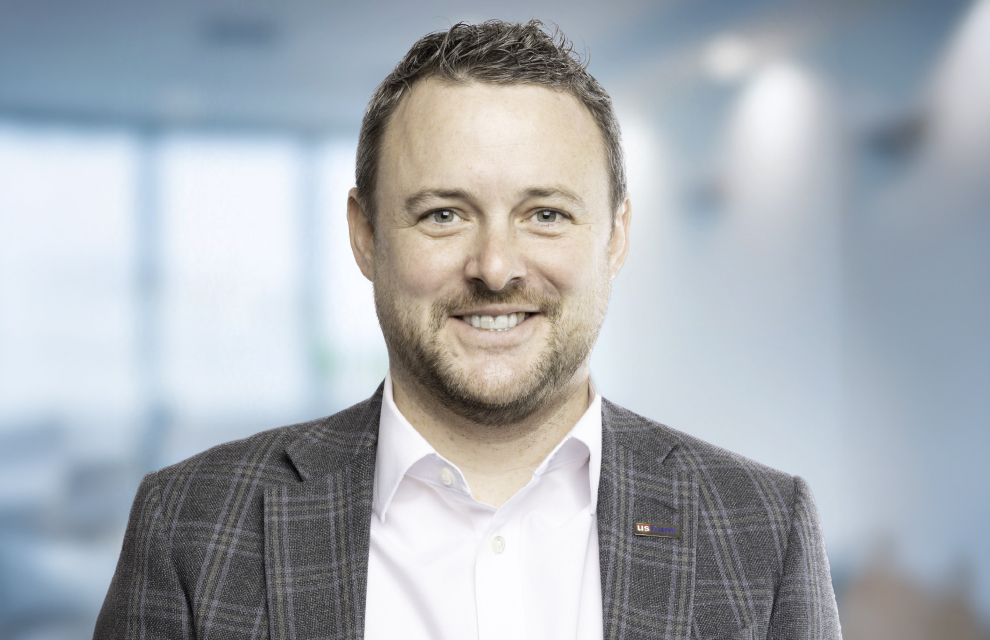 Image: U.S. Bank
Asset managers are operating in an increasingly complex environment across products, markets, and servicing requirements. For U.S. Bank, that has created a case for bringing custody for asset managers into a dedicated vertical, designed to give clients a more unified route into the bank’s capabilities.
Wally Barys, who recently took over as head of Custody for Asset Managers within U.S. Bank’s global Investment Services business, says the change is less about creating a new custody product than reorganising how existing expertise is delivered to asset manager clients.
“We have always had a very strong custody product offering supporting all of our business lines,” he says.
“What we’re doing now with the centralised vertical for custody is bringing together the client experience and the subject matter expertise.”
The move comes as U.S. Bank sees growth across exchange traded funds (ETFs), alternatives, private markets, digital assets, and cross-border strategies. While custody remains a core function regardless of client type, the structures around it are becoming more complex and require greater coordination across service, operations, technology, and market expertise.
Previously, custody expertise for asset managers and corporate trust clients sat across different parts of the Investment Services organisation. Bringing these capabilities together, Barys says, should create a clearer operating model for clients navigating more complex asset classes, shifting regulations, and global markets.
Breaking down service silos
One of the main objectives is to remove internal silos for clients using U.S. Bank across multiple products.
An asset manager may use the bank through its corporate trust business while also relying on U.S. Bank for fund administration, custody, foreign exchange, or cash management services. A fragmented model can make it harder to determine ownership of an issue or find the correct escalation point.
“The gap that was there was not having a centralised point for a unified experience to deliver all those services to our clients,” Barys explains.
The new vertical is intended to create clearer accountability, faster escalation management, and more consistent service delivery. This becomes particularly important as asset managers enter markets requiring deeper local expertise.
Barys points to increasing ETF activity in markets such as India and South Korea, where custody intersects with market-specific operational requirements. Having specialists able to speak across different client types and strategies should, he says, make the model easier for clients to navigate.
Different funds, different servicing demands
Although custody remains the common foundation, servicing requirements vary considerably across fund types and asset classes.
Traditional mutual funds represent what Barys describes as the “classic” custody model. ETFs, by contrast, place greater pressure on scale, precision, and coordination because of their daily creation and redemption processes.
That requires closer alignment between operations, client service teams, and business leads. Barys sees the centralised vertical as a way to streamline that interaction as U.S. Bank continues growing its ETF servicing business.
Private markets and alternatives create a different set of challenges. Assets may involve less standardised instruments, complex documentation, different valuation, or servicing requirements and, in some cases, processes still reliant on paper documentation.
The challenge is therefore not necessarily the same high-volume operating rhythm seen in ETFs, but the need to handle more bespoke requirements.
Global expansion adds another layer. Barys highlights growing investment into mainland China, Vietnam, India, and South Korea.
ETFs, private markets, and global or emerging-market strategies consequently form the three main themes shaping the vertical in its early stages.
Creating an end-to-end custody experience
The practical aim is to create what Barys calls “one coordinated team” for the client.
That means a consistent experience across onboarding, account opening, settlement, asset servicing, and corporate actions, while operational teams continue handling day-to-day processing and risk management.
The custody vertical sits between clients and operations, with responsibility for service coordination, complex enquiries, escalation management, and ensuring the right subject matter experts are engaged at the right time.
Barys says the model should provide better visibility and more consistent standards, while making it easier for the bank to respond to industry change. He points to shorter settlement cycles and market infrastructure modernisation as developments affecting custody operating models.
A centralised structure should make it easier to align service-level expectations, key performance indicators, policies, and procedures across the custody business, while giving clients a clearer path for communication when requirements change.
“In summary, [it is] a specialised service delivery model sitting between clients and operations, owning complex enquiries, escalations, and service coordination end to end for the client,” he says.
Where U.S. Bank sees growth
ETFs remain one of the clearest opportunities. Barys says U.S. Bank has experienced significant ETF growth over recent years and intends to continue focusing on more complex funds, including those investing into harder-to-access foreign markets.
Custody is only one part of that proposition. International investment can also bring foreign exchange and cash management requirements, with Barys describing custody as the “anchor product” around which wider services can be connected.
Private markets and alternatives are another priority as traditional managers expand beyond public markets. Meanwhile, global and emerging-market strategies are becoming more important as U.S. Bank’s client base becomes less domestically focused.
The bank wants to strengthen local-market knowledge across account opening, FX, settlement, and asset servicing, with the centralised custody vertical acting as the route through which that expertise is delivered.
Digital assets also illustrate the need for providers to adapt as demand and market structures evolve.
“You have to be ready to pivot very quickly,” Barys says.
Small and middle-market asset managers will remain an important segment, particularly where clients already have relationships with the wider bank beyond custody.
Technology aimed at reducing friction
Technology will play a central role in the vertical’s development, but Barys stresses that investment will target specific operational pain points rather than technology for its own sake.
After spending his first weeks in the role meeting key clients, he identifies access to data as one of the most important areas for improvement.
“Data remains a crucial part of service delivery to clients,” he says. “Our clients expect more than asset safekeeping. They want timely, accurate, and actionable information that helps them manage cash, liquidity, trading activity, and risk across their business. The quality of the data we provide is becoming just as important as the underlying custody service itself.”
The technology roadmap will focus on more efficient reporting, smoother onboarding, stronger workflow coordination, and faster issue resolution. Onboarding is particularly important as clients launch more complex products or enter markets where account opening and documentation can be more demanding than for a standard fund.
U.S. Bank already provides digital tools for online cash and securities movement and reporting through its client portal. Barys says the bank will continue investing in those capabilities to make information easier to submit, access, and process in a more automated way.
Consistency across geographies is another priority. Technology should help create more consistent operating models as the bank supports clients in the US and Europe.
“It’s not technology for technology’s sake,” he informs. “We want to be more scalable and just make it easier for clients to access their information, especially with shrinking settlement cycles.”
Custody as the backbone
The new vertical is also intended to connect custody more closely with U.S. Bank’s wider investment services and banking capabilities. Within investment services, that includes fund accounting, administration, and transfer agency, while the wider bank also provides corporate banking, brokerage, and capital markets capabilities. Barys says U.S. Bank wants to “deliver the entire bank” to clients.
“We don’t want custody to sit in isolation,” he says. “We believe that custody connects fund accounting, administration, transfer agency, FX, cash and broader banking relationships in a way that can allow asset managers to access our full suite of offerings through one coordinated experience.
For asset managers, the aim is to make those capabilities feel more connected and position custody as a backbone for broader relationships and future growth.
Building the vertical
Over the next 12 to 18 months, Barys has five areas of focus.
The first is building the operating model, including clearer ownership across product groups, service operations, global network management, and the client experience team. This includes strategic hires and bringing the right groups together.
Second is deepening the bank’s focus on asset managers, particularly ETFs, alternatives, and private markets, while working with existing clients to understand what products and markets they may move into next.
Third is creating a consistent global strategy across the US, London, Dublin, and Luxembourg so clients experience what Barys describes as “one U.S. Bank” from a custody perspective.
The fourth priority is improving the end-to-end client experience by reducing friction, strengthening escalation management, and creating greater consistency across products and locations.
Finally, technology investment will be directed at those same friction points, particularly account opening, enquiry management, and escalation.
Success will ultimately be judged through the client relationship.
Barys points to client satisfaction, growth in existing custody relationships, and expansion in the US and Europe as evidence that the model can scale consistently across geographies.
“In short, our goals are stronger client relationships, clearer accountability, scalable growth, and a custody experience that asset managers view as integrated, responsive, and easy to work with,” he summarises.
The ambition is straightforward: clients should not need to understand U.S. Bank’s internal structure to get an answer.
“The client should not have to navigate an org chart to get a fast, comprehensive and knowledgeable response from us,” Barys concludes.
Wally Barys, who recently took over as head of Custody for Asset Managers within U.S. Bank’s global Investment Services business, says the change is less about creating a new custody product than reorganising how existing expertise is delivered to asset manager clients.
“We have always had a very strong custody product offering supporting all of our business lines,” he says.
“What we’re doing now with the centralised vertical for custody is bringing together the client experience and the subject matter expertise.”
The move comes as U.S. Bank sees growth across exchange traded funds (ETFs), alternatives, private markets, digital assets, and cross-border strategies. While custody remains a core function regardless of client type, the structures around it are becoming more complex and require greater coordination across service, operations, technology, and market expertise.
Previously, custody expertise for asset managers and corporate trust clients sat across different parts of the Investment Services organisation. Bringing these capabilities together, Barys says, should create a clearer operating model for clients navigating more complex asset classes, shifting regulations, and global markets.
Breaking down service silos
One of the main objectives is to remove internal silos for clients using U.S. Bank across multiple products.
An asset manager may use the bank through its corporate trust business while also relying on U.S. Bank for fund administration, custody, foreign exchange, or cash management services. A fragmented model can make it harder to determine ownership of an issue or find the correct escalation point.
“The gap that was there was not having a centralised point for a unified experience to deliver all those services to our clients,” Barys explains.
The new vertical is intended to create clearer accountability, faster escalation management, and more consistent service delivery. This becomes particularly important as asset managers enter markets requiring deeper local expertise.
Barys points to increasing ETF activity in markets such as India and South Korea, where custody intersects with market-specific operational requirements. Having specialists able to speak across different client types and strategies should, he says, make the model easier for clients to navigate.
Different funds, different servicing demands
Although custody remains the common foundation, servicing requirements vary considerably across fund types and asset classes.
Traditional mutual funds represent what Barys describes as the “classic” custody model. ETFs, by contrast, place greater pressure on scale, precision, and coordination because of their daily creation and redemption processes.
That requires closer alignment between operations, client service teams, and business leads. Barys sees the centralised vertical as a way to streamline that interaction as U.S. Bank continues growing its ETF servicing business.
Private markets and alternatives create a different set of challenges. Assets may involve less standardised instruments, complex documentation, different valuation, or servicing requirements and, in some cases, processes still reliant on paper documentation.
The challenge is therefore not necessarily the same high-volume operating rhythm seen in ETFs, but the need to handle more bespoke requirements.
Global expansion adds another layer. Barys highlights growing investment into mainland China, Vietnam, India, and South Korea.
ETFs, private markets, and global or emerging-market strategies consequently form the three main themes shaping the vertical in its early stages.
Creating an end-to-end custody experience
The practical aim is to create what Barys calls “one coordinated team” for the client.
That means a consistent experience across onboarding, account opening, settlement, asset servicing, and corporate actions, while operational teams continue handling day-to-day processing and risk management.
The custody vertical sits between clients and operations, with responsibility for service coordination, complex enquiries, escalation management, and ensuring the right subject matter experts are engaged at the right time.
Barys says the model should provide better visibility and more consistent standards, while making it easier for the bank to respond to industry change. He points to shorter settlement cycles and market infrastructure modernisation as developments affecting custody operating models.
A centralised structure should make it easier to align service-level expectations, key performance indicators, policies, and procedures across the custody business, while giving clients a clearer path for communication when requirements change.
“In summary, [it is] a specialised service delivery model sitting between clients and operations, owning complex enquiries, escalations, and service coordination end to end for the client,” he says.
Where U.S. Bank sees growth
ETFs remain one of the clearest opportunities. Barys says U.S. Bank has experienced significant ETF growth over recent years and intends to continue focusing on more complex funds, including those investing into harder-to-access foreign markets.
Custody is only one part of that proposition. International investment can also bring foreign exchange and cash management requirements, with Barys describing custody as the “anchor product” around which wider services can be connected.
Private markets and alternatives are another priority as traditional managers expand beyond public markets. Meanwhile, global and emerging-market strategies are becoming more important as U.S. Bank’s client base becomes less domestically focused.
The bank wants to strengthen local-market knowledge across account opening, FX, settlement, and asset servicing, with the centralised custody vertical acting as the route through which that expertise is delivered.
Digital assets also illustrate the need for providers to adapt as demand and market structures evolve.
“You have to be ready to pivot very quickly,” Barys says.
Small and middle-market asset managers will remain an important segment, particularly where clients already have relationships with the wider bank beyond custody.
Technology aimed at reducing friction
Technology will play a central role in the vertical’s development, but Barys stresses that investment will target specific operational pain points rather than technology for its own sake.
After spending his first weeks in the role meeting key clients, he identifies access to data as one of the most important areas for improvement.
“Data remains a crucial part of service delivery to clients,” he says. “Our clients expect more than asset safekeeping. They want timely, accurate, and actionable information that helps them manage cash, liquidity, trading activity, and risk across their business. The quality of the data we provide is becoming just as important as the underlying custody service itself.”
The technology roadmap will focus on more efficient reporting, smoother onboarding, stronger workflow coordination, and faster issue resolution. Onboarding is particularly important as clients launch more complex products or enter markets where account opening and documentation can be more demanding than for a standard fund.
U.S. Bank already provides digital tools for online cash and securities movement and reporting through its client portal. Barys says the bank will continue investing in those capabilities to make information easier to submit, access, and process in a more automated way.
Consistency across geographies is another priority. Technology should help create more consistent operating models as the bank supports clients in the US and Europe.
“It’s not technology for technology’s sake,” he informs. “We want to be more scalable and just make it easier for clients to access their information, especially with shrinking settlement cycles.”
Custody as the backbone
The new vertical is also intended to connect custody more closely with U.S. Bank’s wider investment services and banking capabilities. Within investment services, that includes fund accounting, administration, and transfer agency, while the wider bank also provides corporate banking, brokerage, and capital markets capabilities. Barys says U.S. Bank wants to “deliver the entire bank” to clients.
“We don’t want custody to sit in isolation,” he says. “We believe that custody connects fund accounting, administration, transfer agency, FX, cash and broader banking relationships in a way that can allow asset managers to access our full suite of offerings through one coordinated experience.
For asset managers, the aim is to make those capabilities feel more connected and position custody as a backbone for broader relationships and future growth.
Building the vertical
Over the next 12 to 18 months, Barys has five areas of focus.
The first is building the operating model, including clearer ownership across product groups, service operations, global network management, and the client experience team. This includes strategic hires and bringing the right groups together.
Second is deepening the bank’s focus on asset managers, particularly ETFs, alternatives, and private markets, while working with existing clients to understand what products and markets they may move into next.
Third is creating a consistent global strategy across the US, London, Dublin, and Luxembourg so clients experience what Barys describes as “one U.S. Bank” from a custody perspective.
The fourth priority is improving the end-to-end client experience by reducing friction, strengthening escalation management, and creating greater consistency across products and locations.
Finally, technology investment will be directed at those same friction points, particularly account opening, enquiry management, and escalation.
Success will ultimately be judged through the client relationship.
Barys points to client satisfaction, growth in existing custody relationships, and expansion in the US and Europe as evidence that the model can scale consistently across geographies.
“In short, our goals are stronger client relationships, clearer accountability, scalable growth, and a custody experience that asset managers view as integrated, responsive, and easy to work with,” he summarises.
The ambition is straightforward: clients should not need to understand U.S. Bank’s internal structure to get an answer.
“The client should not have to navigate an org chart to get a fast, comprehensive and knowledgeable response from us,” Barys concludes.
NO FEE, NO RISK
100% ON RETURNS If you invest in only one asset servicing news source this year, make sure it is your free subscription to Asset Servicing Times
100% ON RETURNS If you invest in only one asset servicing news source this year, make sure it is your free subscription to Asset Servicing Times