The evolution of fund services
14 Oct 2026
As regulation, technology, and consolidation reshape fund administration, Yealand Fund Services CEO Rob Leedham explains to Zarah Choudhary how administrators need scale and investment to keep pace, but warns that the industry should not lose sight of the personal relationships underpinning the outsourcing model
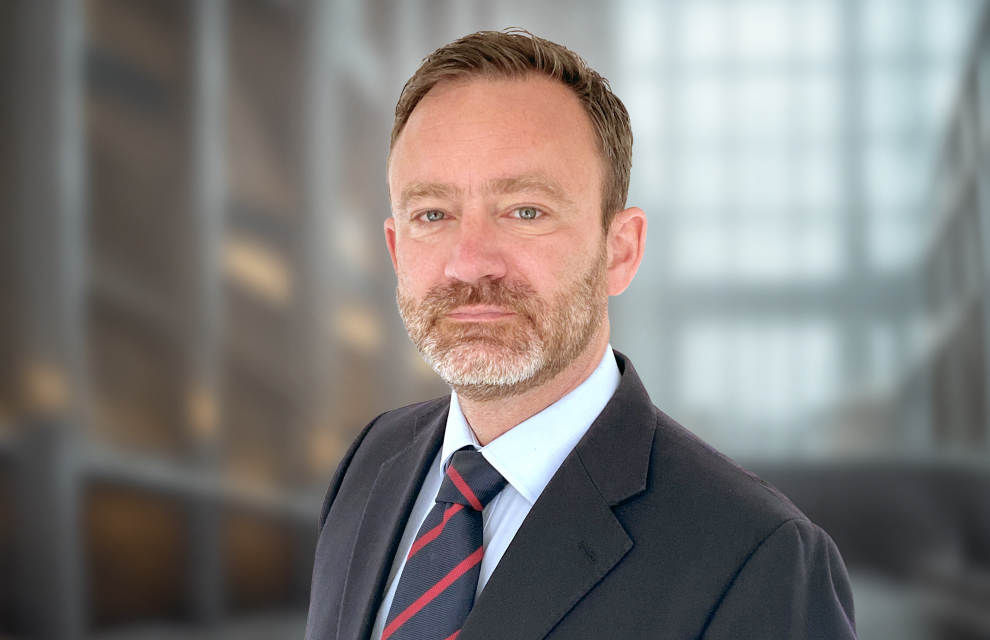 Image: Yealand Fund Services
Over more than three decades in fund administration, Rob Leedham has watched the industry move from relatively simple processing operations to a highly regulated, technology-driven, and increasingly global business, with administrators taking on a more strategic role in supporting investment managers.
Leedham, CEO of Yealand Fund Services, has spent 32 years in financial services, including roles at the Bank of New York Mellon, BNP Paribas, and Societe Generale. Before joining Yealand more than five years ago, he spent a decade as managing director of Maitland Administration Services.
For him, one of the clearest changes during that period has been the evolution of outsourcing and the expanding responsibilities placed on fund administrators.
“When I first started in the industry, outsourcing was quite new, and my first roles were in-house doing fund administration,” he explains. “It was really in the late 1990s that it started to become a compelling proposition.”
Fund administration itself was also considerably simpler. Systems were more basic and administrators were primarily concerned with functions such as producing net asset values (NAVs) and financial reporting.
“You fast forward 30 years and it has completely changed, mainly driven by regulatory requirements and reporting,” Leedham says.
“The burden now of regulatory reporting is seismic compared to the 1990s, and that’s where you see the benefit and cost savings of outsourcing to fund administrators. It’s no longer just about producing a daily NAV and reporting accounts. There’s all the additional regulatory reporting and monitoring that goes on.”
Technology has simultaneously transformed how those services are delivered.
Processes that were once heavily dependent on manual resources have increasingly been automated, while operating models have expanded beyond traditional financial centres.
“Gone are the days when everything used to be done in London,” he remembers. “Companies started moving their business out of London to Scotland because it was more cost effective, and then it started moving further afield to areas such as Poland, India, South Africa, and Malaysia.”
The result is a global and increasingly institutionalised fund administration industry characterised by consolidation, automation, and persistent pressure on costs.
“Every year, you’re being asked to do it cheaper and cheaper,” Leedham adds. “But I think the main change that has driven the industry has been the focus on compliance and regulation. It has been intense, and it gets more and more every year.”
AI brings opportunity and risk
The next stage of that technological evolution is increasingly centred on AI. Leedham says automation itself is hardly new to fund administration, pointing to the use of Excel macros and automated reconciliations as earlier examples. AI, however, is opening up a much wider range of potential applications.
“Everyone’s trying to work out the best use of AI,” he informs. “We’ve started using it more for sourcing data or analysing data, and I think it can go a lot further.”
The opportunity extends beyond simply accelerating existing processes. By using AI to support information gathering, data analysis and routine administrative tasks, fund administrators can free up experienced professionals to focus on more complex activities, regulatory oversight and client service. Rather than replacing human expertise, the technology has the potential to make better use of it. However, Leedham cautions against moving too quickly.
“I think the concern is maybe going too fast, too soon. Everyone’s trying to push the boundaries, but if you go too far, it’s very hard to scale that back.”
Data protection is particularly important for administrators because of the volume of personal information handled across investment management.
“There’s a lot of personal data involved in investment management, so I think there are concerns about having the right safeguards in place,” he explains.
Beyond these considerations, AI also has the potential to strengthen existing control frameworks rather than simply streamlining processes. Where AI supports the initial sourcing or analysis of information, established human review processes can remain in place, effectively introducing an additional layer of scrutiny. The challenge for administrators is to realise these benefits while maintaining appropriate governance, validation and accountability. For Leedham, AI is set to become an integral part of the industry’s future.
“It’s the future, right? So it’s about embracing it and learning it at the same time.”
From provider to strategic partner
Growing operational and regulatory requirements have also changed the relationship between fund managers and their administrators.
“At the beginning, the fund administrator was just seen as a service provider,” Leedham says. “Basically, they do all the heavy lifting and you blame the fund administrator when things go wrong.”
That relationship has become much more strategic as managers increasingly depend on administrators for critical operational functions.
“Fund administrators are now seen as a strategic partnership, and it’s a fundamental piece of investment management. Getting that relationship right is important because there’s so much reliance now on the fund administrator.”
Transfer agency and fund administration relationships are becoming particularly embedded within managers’ operating models, with Leedham pointing to contracts stretching seven or 10 years. “You don’t want to be changing your service provider every two or three years, which used to happen. Now it’s so embedded within the business.”
Real-time data connections are reinforcing that interdependence. “It’s almost part of your own business, but an independent outsource at the same time,” he adds.
Consolidation leaves space for independents
That emphasis on relationships is also central to Leedham’s view of consolidation within the administration market. He estimates that the number of independent administrators and authorised corporate directors (ACDs) in the UK has fallen substantially in only a few years, with further consolidation likely.
“It’s a shame,” he says. “I understand that, like any business, successful businesses are consumed by bigger businesses for competitive advantage. But if you have too much consolidation, you take away that competitive angle. If you’re left with two providers, you don’t really have a choice.”
The question is relevant to investment managers across the market, as consolidation can reduce the diversity of providers and operating models available to them.
“There’s a clear need for choice in the market, with investment managers looking for providers that offer not only operational capability, but genuine partnership, collaboration and support”, Leedham notes.
He argues that different operating models offer distinct advantages, with more integrated, collaborative structures enabling closer working relationships, direct access to decision-makers and greater responsiveness to clients’ evolving requirements. “We see it as a two-way relationship. It’s not just providing that data. It’s having that relationship where we’re almost part of your business, and you know each other and get to know everyone.”
This level of integration can allow administrators to operate as an extension of an investment manager’s team, supporting closer collaboration and more responsive decision making. Leedham believes there remains room for both models. Large global managers may require providers capable of supporting multiple markets through a follow-the-sun model, while investment managers with different operational requirements may value providers offering more integrated and responsive service models. However, maintaining a competitive and differentiated model is becoming increasingly difficult as fees come under pressure.
“If you haven’t got scale, it’s very hard for the smaller fund administrators to survive because you’re competing against the bigger players who can do it a lot cheaper,” he explains.
Yet scale need not be defined solely by the size of an organisation. Investment in technology, experienced teams and efficient operating models can also enable providers to deliver the operational resilience, capacity and service quality expected by investment managers.
Preparing for tokenisation
For Yealand itself, Leedham says continued growth and investment are important to remain competitive in an evolving market.
“The importance of continued growth is that it allows us to invest in our people, technology and operating capabilities, while maintaining a competitive and sustainable business model.”
Technology investment forms a significant part of that strategy. Yealand is preparing to go live with transfer agency platform ZILO next year, which Leedham says will help prepare the administrator for the growing digitalisation and tokenisation of investment funds.
“I think that’s going to be the area that transforms the business over the next 10 years,” he says. “The registration and TA industry has been very static in terms of its technology advancements, and I think tokenisation is a game changer, so we need to be ready for that.”
Implementing tokenisation across regulated funds will nevertheless require coordination throughout the servicing chain.
“All the different service providers have to come together at the same time — custodians, registrars, fund administrators, and platforms,” Leedham explains. “I think it’s going to be quite exciting over the next three or four years to see that develop.”
He also expects tokenisation to support the growing accessibility of private markets, helping bring traditionally less accessible asset classes further into the mainstream.
“Private markets will become more mainstream, and I think tokenisation will facilitate that move into private markets,” he predicts.
Technology cannot replace relationships
Asked what administrators should prioritise over the next three to five years, Leedham points first to preparing for tokenisation and digital assets.
“I said a few months ago it’s probably five or six years away. I’m not so sure now. It may be even sooner because everyone’s really getting on board with this, and it will change the industry.”
Regulation remains another major consideration, requiring administrators to continue investing in both employees and technology. But Leedham’s third priority is less technological.
“Don’t forget the importance of relationships,” he highlights. “There is a place for the big institutions where it’s faceless and it’s done very, very cheaply. But I think there’s also room for that personal touch and for building relationships, especially for the smaller providers who are heavily reliant on their administrators.”
That philosophy was part of what attracted Leedham to Yealand.
Founded in 2008 by the Scott family, the company remains privately owned, a structure Leedham believes gives it greater flexibility than models where administrators face stronger short-term pressure on margins.
“A lot of fund managers miss that private ownership because when there’s a focus on margin, and less about what’s important to the customer” he says.
The challenge for independent administrators is therefore balancing that service model with the economics of an industry where managers continually expect more for less.
“Everyone wants to do it cheaper than they’re currently paying,” Leedham concludes. “But to do it properly comes at a cost. There’s a basement in terms of fees.”
Leedham, CEO of Yealand Fund Services, has spent 32 years in financial services, including roles at the Bank of New York Mellon, BNP Paribas, and Societe Generale. Before joining Yealand more than five years ago, he spent a decade as managing director of Maitland Administration Services.
For him, one of the clearest changes during that period has been the evolution of outsourcing and the expanding responsibilities placed on fund administrators.
“When I first started in the industry, outsourcing was quite new, and my first roles were in-house doing fund administration,” he explains. “It was really in the late 1990s that it started to become a compelling proposition.”
Fund administration itself was also considerably simpler. Systems were more basic and administrators were primarily concerned with functions such as producing net asset values (NAVs) and financial reporting.
“You fast forward 30 years and it has completely changed, mainly driven by regulatory requirements and reporting,” Leedham says.
“The burden now of regulatory reporting is seismic compared to the 1990s, and that’s where you see the benefit and cost savings of outsourcing to fund administrators. It’s no longer just about producing a daily NAV and reporting accounts. There’s all the additional regulatory reporting and monitoring that goes on.”
Technology has simultaneously transformed how those services are delivered.
Processes that were once heavily dependent on manual resources have increasingly been automated, while operating models have expanded beyond traditional financial centres.
“Gone are the days when everything used to be done in London,” he remembers. “Companies started moving their business out of London to Scotland because it was more cost effective, and then it started moving further afield to areas such as Poland, India, South Africa, and Malaysia.”
The result is a global and increasingly institutionalised fund administration industry characterised by consolidation, automation, and persistent pressure on costs.
“Every year, you’re being asked to do it cheaper and cheaper,” Leedham adds. “But I think the main change that has driven the industry has been the focus on compliance and regulation. It has been intense, and it gets more and more every year.”
AI brings opportunity and risk
The next stage of that technological evolution is increasingly centred on AI. Leedham says automation itself is hardly new to fund administration, pointing to the use of Excel macros and automated reconciliations as earlier examples. AI, however, is opening up a much wider range of potential applications.
“Everyone’s trying to work out the best use of AI,” he informs. “We’ve started using it more for sourcing data or analysing data, and I think it can go a lot further.”
The opportunity extends beyond simply accelerating existing processes. By using AI to support information gathering, data analysis and routine administrative tasks, fund administrators can free up experienced professionals to focus on more complex activities, regulatory oversight and client service. Rather than replacing human expertise, the technology has the potential to make better use of it. However, Leedham cautions against moving too quickly.
“I think the concern is maybe going too fast, too soon. Everyone’s trying to push the boundaries, but if you go too far, it’s very hard to scale that back.”
Data protection is particularly important for administrators because of the volume of personal information handled across investment management.
“There’s a lot of personal data involved in investment management, so I think there are concerns about having the right safeguards in place,” he explains.
Beyond these considerations, AI also has the potential to strengthen existing control frameworks rather than simply streamlining processes. Where AI supports the initial sourcing or analysis of information, established human review processes can remain in place, effectively introducing an additional layer of scrutiny. The challenge for administrators is to realise these benefits while maintaining appropriate governance, validation and accountability. For Leedham, AI is set to become an integral part of the industry’s future.
“It’s the future, right? So it’s about embracing it and learning it at the same time.”
From provider to strategic partner
Growing operational and regulatory requirements have also changed the relationship between fund managers and their administrators.
“At the beginning, the fund administrator was just seen as a service provider,” Leedham says. “Basically, they do all the heavy lifting and you blame the fund administrator when things go wrong.”
That relationship has become much more strategic as managers increasingly depend on administrators for critical operational functions.
“Fund administrators are now seen as a strategic partnership, and it’s a fundamental piece of investment management. Getting that relationship right is important because there’s so much reliance now on the fund administrator.”
Transfer agency and fund administration relationships are becoming particularly embedded within managers’ operating models, with Leedham pointing to contracts stretching seven or 10 years. “You don’t want to be changing your service provider every two or three years, which used to happen. Now it’s so embedded within the business.”
Real-time data connections are reinforcing that interdependence. “It’s almost part of your own business, but an independent outsource at the same time,” he adds.
Consolidation leaves space for independents
That emphasis on relationships is also central to Leedham’s view of consolidation within the administration market. He estimates that the number of independent administrators and authorised corporate directors (ACDs) in the UK has fallen substantially in only a few years, with further consolidation likely.
“It’s a shame,” he says. “I understand that, like any business, successful businesses are consumed by bigger businesses for competitive advantage. But if you have too much consolidation, you take away that competitive angle. If you’re left with two providers, you don’t really have a choice.”
The question is relevant to investment managers across the market, as consolidation can reduce the diversity of providers and operating models available to them.
“There’s a clear need for choice in the market, with investment managers looking for providers that offer not only operational capability, but genuine partnership, collaboration and support”, Leedham notes.
He argues that different operating models offer distinct advantages, with more integrated, collaborative structures enabling closer working relationships, direct access to decision-makers and greater responsiveness to clients’ evolving requirements. “We see it as a two-way relationship. It’s not just providing that data. It’s having that relationship where we’re almost part of your business, and you know each other and get to know everyone.”
This level of integration can allow administrators to operate as an extension of an investment manager’s team, supporting closer collaboration and more responsive decision making. Leedham believes there remains room for both models. Large global managers may require providers capable of supporting multiple markets through a follow-the-sun model, while investment managers with different operational requirements may value providers offering more integrated and responsive service models. However, maintaining a competitive and differentiated model is becoming increasingly difficult as fees come under pressure.
“If you haven’t got scale, it’s very hard for the smaller fund administrators to survive because you’re competing against the bigger players who can do it a lot cheaper,” he explains.
Yet scale need not be defined solely by the size of an organisation. Investment in technology, experienced teams and efficient operating models can also enable providers to deliver the operational resilience, capacity and service quality expected by investment managers.
Preparing for tokenisation
For Yealand itself, Leedham says continued growth and investment are important to remain competitive in an evolving market.
“The importance of continued growth is that it allows us to invest in our people, technology and operating capabilities, while maintaining a competitive and sustainable business model.”
Technology investment forms a significant part of that strategy. Yealand is preparing to go live with transfer agency platform ZILO next year, which Leedham says will help prepare the administrator for the growing digitalisation and tokenisation of investment funds.
“I think that’s going to be the area that transforms the business over the next 10 years,” he says. “The registration and TA industry has been very static in terms of its technology advancements, and I think tokenisation is a game changer, so we need to be ready for that.”
Implementing tokenisation across regulated funds will nevertheless require coordination throughout the servicing chain.
“All the different service providers have to come together at the same time — custodians, registrars, fund administrators, and platforms,” Leedham explains. “I think it’s going to be quite exciting over the next three or four years to see that develop.”
He also expects tokenisation to support the growing accessibility of private markets, helping bring traditionally less accessible asset classes further into the mainstream.
“Private markets will become more mainstream, and I think tokenisation will facilitate that move into private markets,” he predicts.
Technology cannot replace relationships
Asked what administrators should prioritise over the next three to five years, Leedham points first to preparing for tokenisation and digital assets.
“I said a few months ago it’s probably five or six years away. I’m not so sure now. It may be even sooner because everyone’s really getting on board with this, and it will change the industry.”
Regulation remains another major consideration, requiring administrators to continue investing in both employees and technology. But Leedham’s third priority is less technological.
“Don’t forget the importance of relationships,” he highlights. “There is a place for the big institutions where it’s faceless and it’s done very, very cheaply. But I think there’s also room for that personal touch and for building relationships, especially for the smaller providers who are heavily reliant on their administrators.”
That philosophy was part of what attracted Leedham to Yealand.
Founded in 2008 by the Scott family, the company remains privately owned, a structure Leedham believes gives it greater flexibility than models where administrators face stronger short-term pressure on margins.
“A lot of fund managers miss that private ownership because when there’s a focus on margin, and less about what’s important to the customer” he says.
The challenge for independent administrators is therefore balancing that service model with the economics of an industry where managers continually expect more for less.
“Everyone wants to do it cheaper than they’re currently paying,” Leedham concludes. “But to do it properly comes at a cost. There’s a basement in terms of fees.”
NO FEE, NO RISK
100% ON RETURNS If you invest in only one asset servicing news source this year, make sure it is your free subscription to Asset Servicing Times
100% ON RETURNS If you invest in only one asset servicing news source this year, make sure it is your free subscription to Asset Servicing Times