Lior Yogev, CEO and co-founder at FundGuard, explains why investment accounting infrastructure is becoming the foundation for AI adoption across investment management and asset servicing
Image: FundGuard
Why do you believe AI transformation in investment management starts with accounting infrastructure?
Because AI is only as powerful as the environment it operates in.
If the underlying data is fragmented, delayed, or inconsistent, AI cannot deliver meaningful operational intelligence.
The industry is starting to realise that AI transformation is fundamentally tied to the quality of the accounting foundation beneath it.
What are the biggest operational barriers preventing firms from becoming truly AI-native?
Most firms are still operating across disconnected systems with multiple books of record and heavy reconciliation processes. That creates latency across the organisation.
Before firms can fully benefit from AI, they need a more connected and reliable operating environment.
How is AI changing expectations across investment operations and asset servicing?
AI is accelerating expectations around speed and visibility. Firms no longer want to wait until the end of the day to understand their operational or investment positions. They expect real-time insight and more intelligent workflows across the enterprise.
Why are legacy operating models struggling to support modern investment complexity?
The industry has evolved significantly faster than the infrastructure supporting it. Firms are managing increasingly complex products across more markets and jurisdictions, often on architectures that were designed decades ago for a much simpler operating environment.
Many of those systems were built around batch processing, siloed data models, and end-of-day workflows. Even with cloud-enabled layers and aggregation tools added over time, firms are often still operating on underlying architectures that were never designed for real-time, AI-driven operations.
What does “real-time accounting” actually mean in practice?
It means firms operate from a live operational view instead of relying on delayed reporting cycles. Accounting becomes part of the decision-making process itself rather than something that happens after the fact.
How do you see the role of asset servicers evolving over the next five years?
Asset servicers are becoming strategic infrastructure partners. The expectation is shifting beyond processing toward delivering greater insight, scalability, and transparency to clients.
How are private markets and complex products exposing infrastructure weaknesses?
Private markets and hybrid investment products are accelerating the pressure on existing operating models.
Firms are managing increasingly complex structures, liquidity profiles, and valuation requirements across environments originally built for traditional public market workflows.
What the industry increasingly needs is a more unified operational approach that can support both public and private markets consistently and at scale.
What does the future operating model of investment management look like?
More unified, more intelligent, and far more continuous.
The industry is moving toward operating models built around continuous visibility and shared operational data rather than fragmented processes and reconciliation cycles.
How should industry leaders think differently about AI adoption?
They should focus less on isolated AI applications and more on the operational foundation underneath them. Sustainable AI transformation requires trusted infrastructure, not just new tools layered onto legacy environments.
Where do you think the investment operations industry will look fundamentally different in the next decade?
The industry will move away from fragmented, reconciliation-driven operations toward far more continuous and resilient operating models. Investment firms will increasingly operate from live, connected views of data across the enterprise, with intelligence and automation embedded directly into the operational foundation itself.
Accounting will evolve from a backward-looking reporting function into a real-time system of record that supports decision-making, oversight, and operational resilience across the investment lifecycle.
NO FEE, NO RISK 100% ON RETURNSIf you invest in only one asset servicing news source this
year, make sure it is your free subscription to Asset Servicing Times


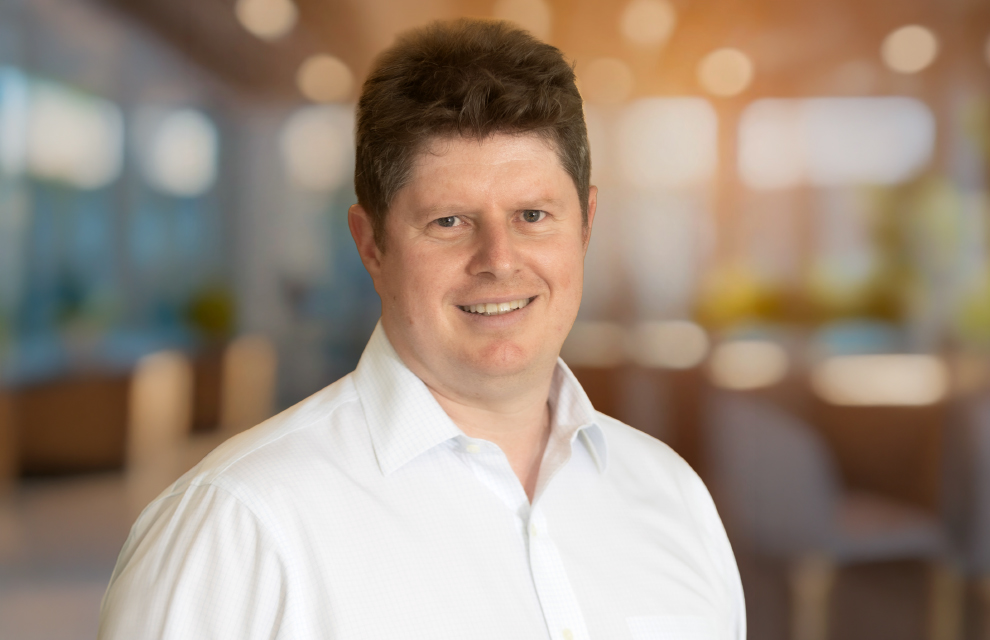 Image: FundGuard