You were appointed CEO earlier this year. What drew you to Tesseract, and what is your vision for the company under your leadership?
I have had an interesting run in digital assets. I started in 2017 when I founded a company that I later sold. I then spent about six years scaling other businesses, but not as the number one decision-maker. In my previous role, I realised that at the end of the day, not only was I not calling the shots, but I also felt I was essentially working for a bank. That was not where I wanted to be, given my background in digital assets.
For me, the decision to join Tesseract was twofold. First, it was a step back into the CEO role, to prove to myself that I could lead and scale an established business.
Tesseract has around 25 employees, multiple revenue streams, and a rapidly expanding client base. It is a fantastic challenge, and one I felt uniquely suited to.
Second, I wanted to get back to the reason I entered digital assets in the first place — to move away from banks and into a sector that could democratise value transfer.
Tesseract is an institutional yield generator. It earns yield in multiple ways across crypto — through a centralised lending book and by deploying assets across DeFi protocols. That combination is right at the intersection of my skills and passions.
My vision is ambitious. We have been around for seven years, and frankly, Tesseract should be further ahead. We were one of the first entrants in institutional yield but did not make enough of that first-mover advantage. Some of that was bad timing with market cycles, but some was a lack of scaling and execution. I want to change that.
Looking forward, I see us leaning into yield-as-a-service for more business-to-business-to-consumer platforms — we already work with Bitstamp, now part of Robinhood — and expanding to serve corporations with large bitcoin or ethereum treasuries. We are regulated in Helsinki, and we can offer them compliant, institutional-grade yield. The opportunity is clear — now it is about execution and brand visibility.
What are your key priorities for the next 12–18 months?
I have just finished writing our strategy with the management team. It is built around four pillars:
Brand: Tesseract is a sleeping giant. We need to build a premium brand that makes our institutional-grade value proposition clear, supported by the right regulatory credentials. Transacting in digital assets is all about trust.
Technology: We need to make integration easy. That means robust APIs and systems that clients can embed into their own services without friction.
Client service: Our commercial and operations teams need to be laser-focused on the client experience. Serving clients well has to be the heart of everything.
Product performance: We must continuously improve our products so they deliver value. If clients want yield in bitcoin or ethereum, we need to provide it reliably, from sustainable sources.
An additional focus is people. When I joined, I was surprised that crypto-native expertise was not as widespread as I expected.
We are hiring seven or eight roles now. I want team members with a real passion for crypto, ideally a professional track record, but at least a personal interest. Passion matters — if you enjoy exploring protocols, the work does not feel like a chore.
Tesseract recently achieved SOC 2 Type II certification for the third year in a row. Why is this important, and how does it benefit clients?
Our slogan is ‘Earn with Confidence’, and that confidence comes from many places. Clients need to trust that when they hand over assets, they will get them back safely. They need to trust the yield we promise, and they need to trust the strength of our operational security.
Achieving SOC 2 Type II for the third time demonstrates that our internal controls, data security, and risk management are not just designed well but actually work over time. It is not a badge for marketing; it is an ongoing commitment.
Too many firms see accreditation as a one-off exercise. For us, it is about operational maturity and continuous improvement.
For clients, it is validation that Tesseract is a place they can trust. In this industry, not every competitor has the same standards — some manage billions without institutional-grade controls, which I find alarming. We invest in this so clients can sleep at night, and so can we.
You have also partnered with Reversec to accelerate ISO 27001 readiness. Why take this approach instead of building capabilities internally?
Reversec, formerly WithSecure, is a trusted name in InfoSec and OpSec, with Finnish origins like us. They act as sparring partners, keeping us aligned with the latest best practices and emerging threats. Their knowledge helps shape our information security management system and regulatory readiness.
Replicating that level of expertise internally would take huge resources. It makes more sense to work with specialists, while our engineers focus on client-facing improvements and lending products. As we grow, I expect we will continue to rely on partners like Reversec.
Cybersecurity is a major issue in digital assets. What threats concern you most, and how do you address them?
The biggest risk is social engineering and phishing. We train our staff extensively and run live tests — sending phishing emails or even QR codes in the office to see how people react. It creates awareness and healthy caution.
We also avoid rushing into new, untested protocols. We stick to platforms that are audited and have stood the test of time. Structurally, we are rolling out multi-custodian architecture to reduce concentration risk.
Of course, threats are evolving. AI makes phishing more convincing, and adversaries like the Lazarus Group in North Korea are highly sophisticated. It is a constant cat-and-mouse game.
We counter this with strong governance, transparent processes, and partnerships that keep us ahead of the curve.
Regulation is shifting quickly, especially in Europe. How is Tesseract positioned?
For institutions, the future is regulated. We are Markets in Crypto-Assets (MiCA) ready and have secured our Crypto Asset Service Provider (CASP) licence.
The MiCA/CASP licence is also a big milestone, giving us advantages over competitors.
MiCA introduces more oversight and specific requirements, but that is positive. It creates a clear framework for firms like ours. Globally, we see regulation clarifying in the US, EU, and UAE, with the UK hopefully catching up.
But securing a licence is not the end point. Compliance means resourcing the function properly and living up to the commitments daily — reporting, operations, and client protection. That is where trust is built.
Looking ahead, what excites you most about Tesseract’s future?
Several things. We are close to launching new yield products, which I think will resonate strongly with clients. The MiCA/CASP licence will also be a big milestone, giving us advantages over competitors.
On the commercial side, expanding yield-as-a-service for Business-to-Business consumer partners like Bitstamp or Robinhood and working with corporates holding crypto treasuries are huge opportunities.
Finally, I am excited to build our brand visibility. We have under-invested in that, but as we raise awareness, I expect more traction.
These are unprecedented times: regulatory clarity is improving, corporates are adding crypto to their balance sheets, and institutional adoption is accelerating.
It is a great time to be leading Tesseract.
← Previous interview
BNP Paribas
Jules Bottlaender
Next interview →
Fexserv Fund Services
Anabel Mifsud
.jpg)

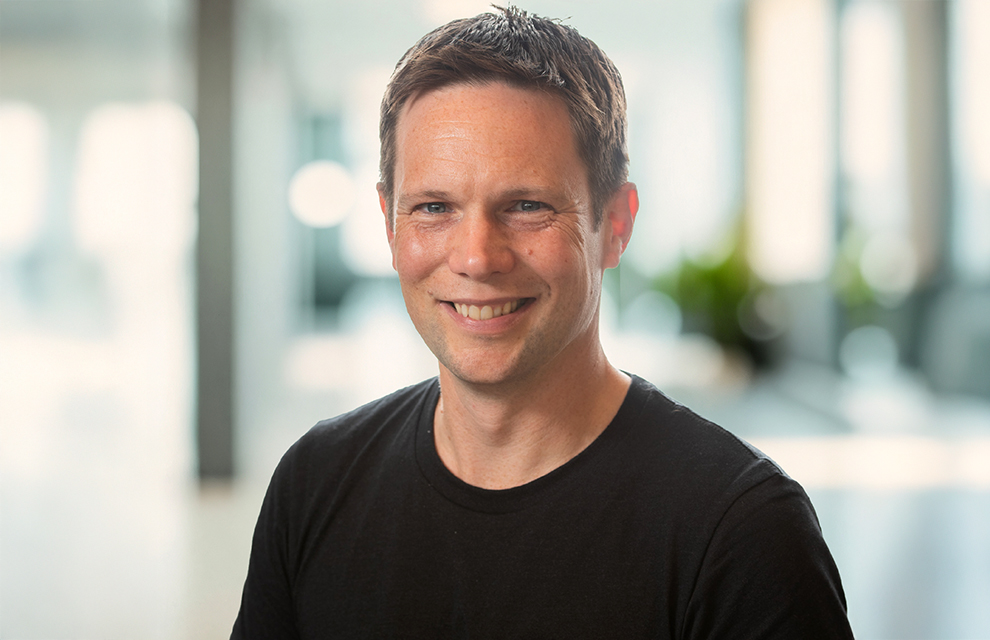 Image: Tesseract