Can you give us an insight into your personal journey into the asset services industry, why did you decide this was the career for you?
Originally from China, I graduated from Zhejiang University with a degree in finance before moving to the UK to pursue a Master of Financial Analysis at London Business School (LBS). Given my academic background, a career in finance felt like a natural choice, but I wasn’t immediately sure which area would be the best fit.
My first internship was in investment banking, where I experienced the fast-paced environment first-hand. While I gained valuable exposure to financial models and data as a junior member, I found that the work was more focused on numbers and repetitive desk-based tasks. I realised that it probably didn’t best align with my own interests as a people person.
I then discovered the Securities Services Leadership Program at J.P. Morgan, which was a new initiative at the time. As part of its first intern class, I spent two months learning about the asset servicing industry and connecting with colleagues across the business. The experience was hands-on, and I was impressed by the supportive culture and the broad interaction both internally and externally within the asset services industry. We also had the opportunity to participate in skip-level sessions with senior industry leads, which provided valuable insights and inspiration.
I truly enjoyed the work experience, and what started as a two-month internship evolved into a two-year graduate scheme. Now, several years later, I am still here and continue to enjoy my work. It might sound classic, but for me, it was a case of the right people, the right time, and the right place.
What aspects of your job do you enjoy the most?
What I enjoy most about being a relationship manager in the securities lending space is the balance between variety and continuity. No two days are ever the same — each day brings new situations, different client needs, and a wide range of queries to resolve. I work with diverse clients, each with their own priorities, risk appetite, and operating style, which keeps the role constantly engaging and intellectually stimulating.
At the same time, despite the fast pace and daily dynamics, the role is built on long-term relationships. Over time, I have come to know my clients very well, allowing me to anticipate their needs, provide more tailored, value-added support and further develop the relationship. I really enjoy this combination of building stable, trusted relationships while operating in a role that is dynamic and ever-evolving.
Being fairly new to the industry, how do you find your experience compares to those who are more established? Are there pros and cons to each?
When I first started in the role, I was fortunate to work closely with senior relationship managers and jointly cover clients. That experience allowed me to learn directly from more established colleagues, both in terms of technical knowledge and how to manage client relationships in practice. Their experience and judgement were invaluable, particularly in understanding how to navigate more complex situations.
One thing they taught me that I still benefit from today is: experience naturally takes time to build, but what matters most is finding a way of working that suits both myself and the client.
Being relatively new also has its benefits. I am able to look at processes with a fresh perspective and often feel encouraged to explore areas where there may be opportunities to improve efficiency.
Finding ways to reduce manual touchpoints or streamline processes can make a tangible difference. The firm’s recent adoption of large language models and AI tools also brought further opportunities. I am also trying to build up my skills on it and share some useful tips with the wider team.
Have you noticed any misconceptions about the asset servicing industry? Is there anything in the industry you would like to see evolve or change?
I do think asset servicing is sometimes an undervalued part of the finance industry. When I was studying at LBS, many of my classmates were focused on breaking into investment banking or asset management, while relatively few were familiar with asset servicing or understood what the industry actually does.
One light-hearted moment that stayed with me was a joke shared by a senior colleague in Securities Services, who once received a cold email attempting to sell her fire alarms — apparently on the assumption that we worked in ‘security’ rather than securities.
Having now worked in the industry for around five years, I find it both interesting and intellectually engaging. Areas such as agency securities finance and trading services sit at the centre of global markets, working closely with some of the most prominent institutional clients and across complex asset classes.
The business also has a genuinely global footprint, which adds to its breadth and appeal. If there is one area I would like to see evolve, it would be greater awareness of the industry. To that end, I actively participate in spring weeks and early-career programmes, helping to demystify the industry and encourage more graduates to consider it as a career path.
In terms of your career, where do you see yourself in a decade?
Many of my colleagues have built long-standing careers in the team, which I find both impressive and inspiring. Clients often recall team members who served them 10 or 15 years ago, highlighting the strength and longevity of these relationships. It sets a high standard and motivates me to learn from the best.
Over the upcoming years, my focus will remain on learning and developing my skills. There’s a Chinese proverb that resonates with me — a person is not a vessel with a single function. I hope to continue broadening my capabilities, embracing change, and stepping outside my comfort zone as the industry evolves.
What is the training process of a new employee? Do you think it was beneficial to your role and others who may now be in the same position you were?
I was fortunate that I joined the firm through its graduate programme, which involves rotating across multiple business areas within Securities Services over two and a half years. My first rotation was Client Solutions, where I helped onboard new clients.
The second rotation was Custody Middle Office, where I gained a deep understanding of the trading lifecycle and the broader business context. My third rotation – and current role – is as a relationship manager within the agency securities finance in Buyside Trading Services.
I found this structure very beneficial, both in terms of building a broad skill set and in developing depth where it mattered most. The rotational approach strikes a good balance between learning widely and eventually specialising, while also giving graduates the opportunity to explore different areas of the business and discover where they fit best. For anyone starting in a similar position, I believe this kind of training is invaluable for long-term development.
What advice would you give to young graduates when entering the financial services field?
Focus on building your network. In a broad and complex business such as trading services, it is impossible for any one individual to have expertise across all areas. Knowing the right people and understanding where to seek support, can make a meaningful difference.
In my current role as a relationship manager, I continue to benefit from the network I developed during my rotations in Client Solutions and the wider custody team. In my daily work, I also frequently connect with our Trading team and Product team. Serving the client is never delivered by one person alone — it is fundamentally a team effort.
Equally important is the willingness to learn. A piece of advice from my mentor has stayed with me is that skills can be taught, but attitude cannot. This mindset encourages me to stay curious and open-minded. In my role, I learn a lot through regular conversations with trading services colleagues.
Whether discussing investment strategies with the cash desk or market trends with the flow desk, I gain a deeper understanding of market dynamics and borrower needs.
This broader perspective often adds value to discussions on the lender side and leads to more informed, constructive client conversations.
Next interview →
MUFG Investor Services
Daniel Trentacosta


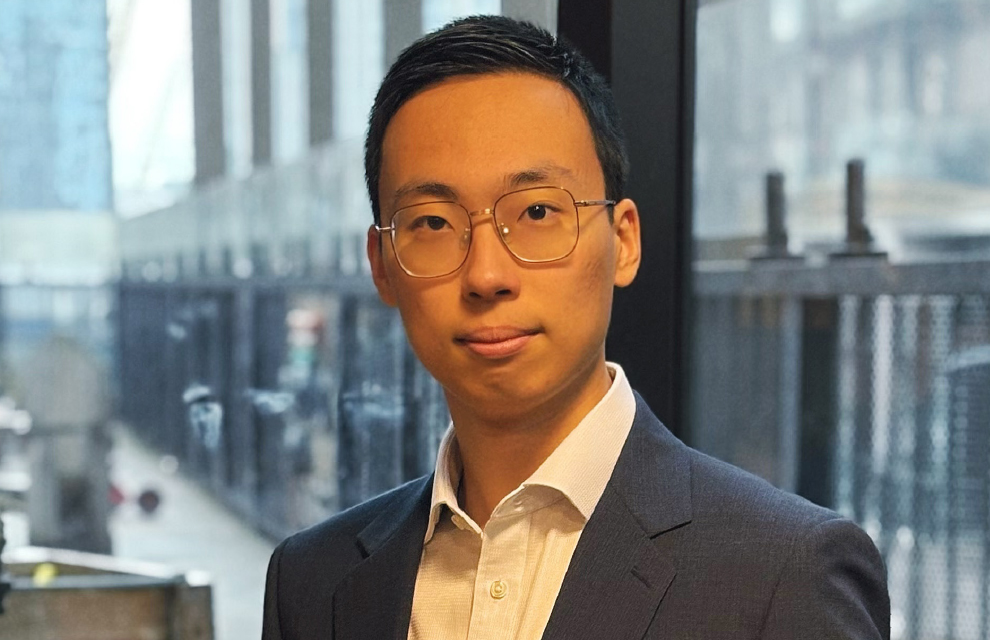 Image: J.P. Morgan