SimCorp
Ruxandra Popovici
15 Apr 2026
Ruxandra Popovici, senior principal product manager at SimCorp, explains how a career change after a Master of Science in Business and Development led her to developing an interest in technology’s role in disrupting workflows
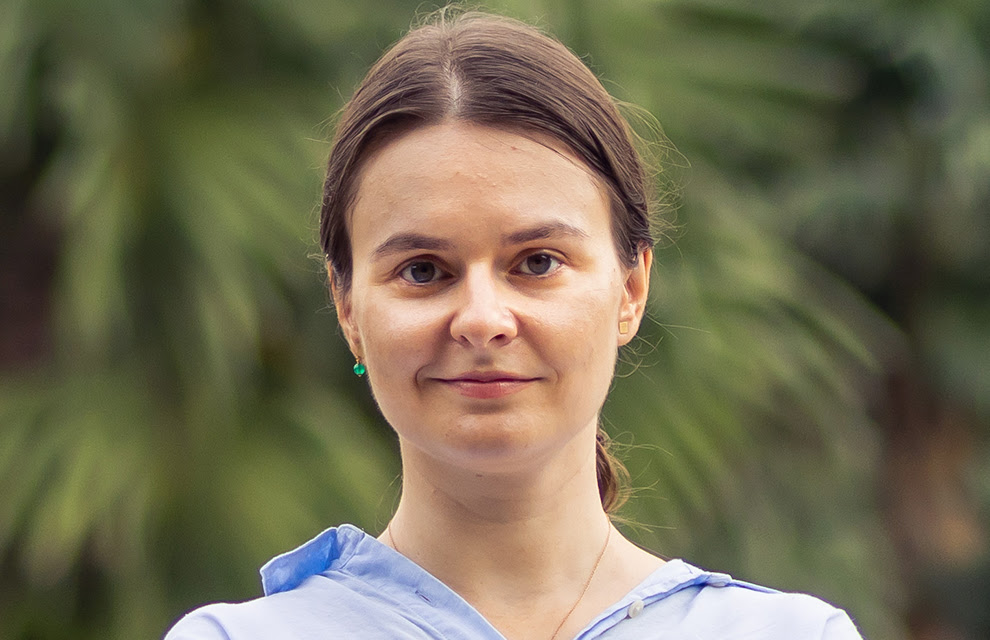 Image: SimCorp
Can you give us an insight into your personal journey into the asset services industry? Why did you decide this was the career for you?
I landed in finance by accident. My master’s degree was closer to the humanities, but the job market at the time of my graduation called for pragmatism.
I started working in traditional finance and soon thereafter I pursued the Chartered Financial Analyst (CFA) charter so that I could keep up with the office jargon.
At the same time, I became interested in technology and its potential for disrupting workflows. I joined SimCorp in 2017 so that I could work with technology, and I have enjoyed it ever since.
During my time at Simcorp, I have focused on back-office functionality. Apart from my own curiosity regarding technology, the biggest draw is the people – whether it is engineers at SimCorp or operators and accountants at clients. I feel that I’m learning something new every day and growing as a professional and as a person.
What aspects of your job do you enjoy most?
I work as a product manager for several teams servicing SimCorp’s investment accounting domain. This means that I get to solve our clients’ problems in a way that also makes economic sense for SimCorp.
I love working with engineers and with technology while keeping close contact to our clients’ needs and challenges.
As anyone in technology will confirm, it is enormous fun to tinker and to create something from thin air – especially when it creates delight and value-add for clients. At the end of the day, I am motivated by seeing our clients succeed.
Being fairly new to the industry, how does your experience compare to those who are more established? Are there pros and cons?
Curiosity is probably a more significant differentiator than level of seniority or years in the industry.
In my experience, it is important to understand that what brought us here will not necessarily take us there – and this mindset is not restricted to age or background.
At the same time, it is good to have more experienced colleagues who can channel my enthusiasm when needed and provide guidance. Established colleagues also tend to have more domain knowledge – not to mention patience.
Something I have realised only recently is that my generation have more diverse role models than the ones that came before us. That is a privilege and an obligation – we must consider succession plans carefully, and to act in ways that enable people of all backgrounds to enter and thrive in financial services.
Have you noticed any misconceptions about the asset servicing industry?
The most pernicious misconception is probably that asset servicing is a traditional area driven by antiquated ways of working. In my experience, the sector is a great catalyst for career growth and evolution, especially for technologists.
The asset servicing industry is facing its own structural challenges and opportunities, such as the demographic shift and the rise of blended operating models enabled by technology and automation. This makes the environment stable and data-rich enough to operate as a launch pad for innovation, such as well-informed AI adoption.
Is there anything in the industry you would like to see evolve or change?
The industry is well-positioned to reap the benefits of wider adoption of technology. Consolidating technical architecture and embracing strategic outsourcing are two trends that could transform asset servicing in the next few years.
What is the training process for a new employee? Was it beneficial to your role and those now in the same position?
Training is an important part of onboarding at SimCorp, and we do not treat it as an afterthought. New joiners are given thorough introductions to the company and its values, as well as more technical aspects of the job. While we take pride in the remarkable pool of talent at SimCorp, we also emphasise psychological safety – junior employees are encouraged to experiment and to learn in a feedback-driven environment, with support from more established colleagues.
While formal training is important, learning on the job makes an enormous difference. I have had the privilege of changing roles three times since joining SimCorp, which puts me in a good position to identify patterns, relate to the user journey and gain knowledge across domains. At the same time, institutional knowledge and network building are essential parts of any professional’s toolkit. This cannot be gained by formal training exclusively.
In terms of your career, where do you see yourself in a decade?
Seeing how fast technology evolves, I would be surprised if I could make any meaningful predictions for the next five years, let alone a decade. The only certainty I have is that I would like to keep learning new things and be dazzled by technology – keep having “wow!” and “aha!” moments, in short. I would also like to be in a position to help others succeed and to build resilient, focused and high-performing teams.
What advice would you give to young graduates entering the financial services field?
Be coachable. You will learn a lot on the job, at a faster pace than what you are likely used to. Even if it feels overwhelming at times, your career will benefit if you embrace feedback early on.
We are sometimes told to work smarter, not harder, but sometimes hard work is really the only solution. Talent is not enough – consistency makes the difference.
Take ownership – your career is not something that happens to you. Exercise agency and do not expect others to make meaningful choices on your behalf.
← Previous interview
FundGuard
Lior Yogev
Next interview →
n-Tier
Peter Gargone
.jpg)