Can you give us an insight into your personal journey into the asset services industry, why did you decide this was the career for you?
My route into asset services was not entirely linear, but that is something I see as a real strength. I was drawn to the industry because it sits at the intersection of markets, infrastructure, and people. Asset servicing may not always be front-page finance, but it is foundational — and it is a people business.
More recently, my interest has deepened through exposure to digital assets, where custody is the number one priority for institutional clients and investors. No matter how innovative the asset or structure, confidence in safekeeping and control is fundamental. Being at the centre of that conversation at Standard Chartered, where markets, technology, and client trust intersect, has reinforced for me that asset services is exactly where I want to build my career.
What aspects of your job do you enjoy the most?
Working in post trade means you cannot operate in silos. You need to understand the full trading flow end-to-end, truly understand your clients and their commercial and operational needs and, most importantly, what they are ultimately trying to achieve. That requires a strong grasp not only of our own business, but also of the broader market and competitive landscape. I really enjoy learning about the whole asset life cycle more broadly.
What I find especially rewarding is the combination of commercial awareness and continuous technical learning.
Every client conversation is different, and success often hinges on trusted relationships — both internally and externally — and knowing how to bring the right people together to deliver the best outcome for the client.
The industry itself is complex and constantly evolving, which keeps the role stimulating. The emergence of digital assets has added another exciting dimension.
Being involved in early stage conversations and contributing to discussions that are actively shaping where the business and the industry are heading is incredibly motivating. It feels like you are not just supporting the market but helping to define its future.
Being fairly new to the industry, how do you find your experience compares to those who are more established? Are there pros and cons to each?
Compared to more established colleagues, I don’t yet have the same depth of experience or instinctive pattern recognition, and that means I can get things wrong. But I have learned that there is real value in sitting with that — letting it marinate, doing the homework, and then circling back with better questions or a clearer point of view. That process has been a big part of my growth.
Have you noticed any misconceptions about the asset servicing industry? Is there anything in the industry you would like to see evolve or change?
I cannot say I have noticed many misconceptions. In terms of what I would like to see evolve — I would like to see continued investment in technology that goes beyond efficiency and really transforms the client and employee experience — whether that is through automation, deeper data and AI-driven insights, or the practical application of blockchain technology.
What is the training process of a new employee? Do you think it was beneficial to your role and others who may now be in the same position you were?
It started with the basics — onboarding sessions, core systems, internal processes, which gave me a foundational understanding of how the organisation operates. From there, a lot of the learning happened on the job through shadowing colleagues, sitting in on client calls, and getting exposure to real life workflows.
I felt like this allowed me to learn at pace, follow my curiosity, and focus on the areas most relevant to my role and clients. Practical experience is the best way to learn.
For others now coming into the same position, I think the biggest benefit is when there is a strong culture of knowledge sharing and support. While there is always room to formalise certain elements further, having access to people who are willing to explain concepts, sense-check thinking, and provide context makes a huge difference.
In terms of your career, where do you see yourself in a decade?
In 10 years, I see myself still very much in a people focused role — that is a constant for me. I get energy from building relationships, working with clients, and bringing people together to solve problems, and I don’t see that changing.
I expect digital assets to continue playing a big part in my career, simply because the space is evolving so quickly and there is so much to build and figure out.
It is less about a specific title and more about staying in roles where I am learning, being challenged, and contributing meaningfully.
I have never been someone who settles too easily. I am lucky in that my current role has a lot of runway — there is depth, complexity, and change, which means I don’t feel like I will stop growing anytime soon. But when I do reach a point where the learning slows down, that is usually a signal for me to push myself into something new.
Ultimately, I want to keep progressing in responsibility and impact, stay close to clients and the market, and continue working in spaces where things are not fully defined yet. That is where I do my best work — when there is room to learn, shape outcomes, and grow alongside the industry.
What advice would you give to young graduates when entering the financial services field?
Ask all the questionsW. Even the ones you think you should already know the answers to and be honest about what you don’t understand. I would also encourage people to really think about things — to let ideas, thoughts, and concerns marinate a bit. Then, do your homework. Taking the time to understand the why behind decisions and processes makes a huge difference.
Finally, use your fresh lens to your advantage. Coming in without years of “this is how it has always been done” can be a real strength. You are more likely to challenge assumptions, spot inefficiencies, and ask questions that others might not think to ask anymore. If you combine that openness with humility and a willingness to learn, it puts you in a really strong position early on.
← Previous interview
FundGuard
Lior Yogev
Next interview →
n-Tier
Peter Gargone
.jpg)

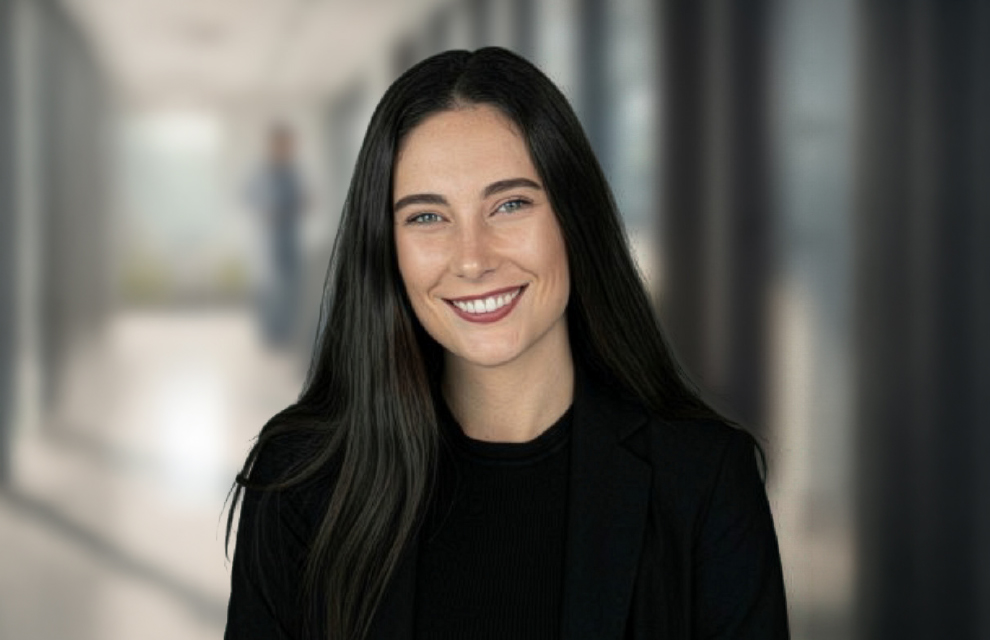 Image: Standard Chartered